How do I avoid a misleading AI visibility percentage?
Define what counts before measuring. Keep mentions, linked sources and subsequent visits separate. Choose representative questions rather than only those your brand already wins.
For an observed citation, save the query, answer, date and source link. Inspect AI readability and robots.txt on the cited URL. Compare subsequent traffic in Search Console while recording the AI service’s citation separately.
What to do step by step
- Build a stable question set across topics.
- Record service, date, language and test conditions.
- Save the answer and exact source URL.
- Check that the answer represents the source correctly.
- Repeat observations and account for changes in the test environment.
A practical example
Question → service → date → mention → cited URL → accuracy → attributable visit, where available. A single percentage without this context can mislead.
A common mistake
An HTML score is not AI market share. Without a defined question set and repeated observations, the denominator and reliability are missing.
Try the report before checking your site.
Explore the sample report, then enter your own URL to see findings, HTML evidence and a repair plan for your page.
Run your audit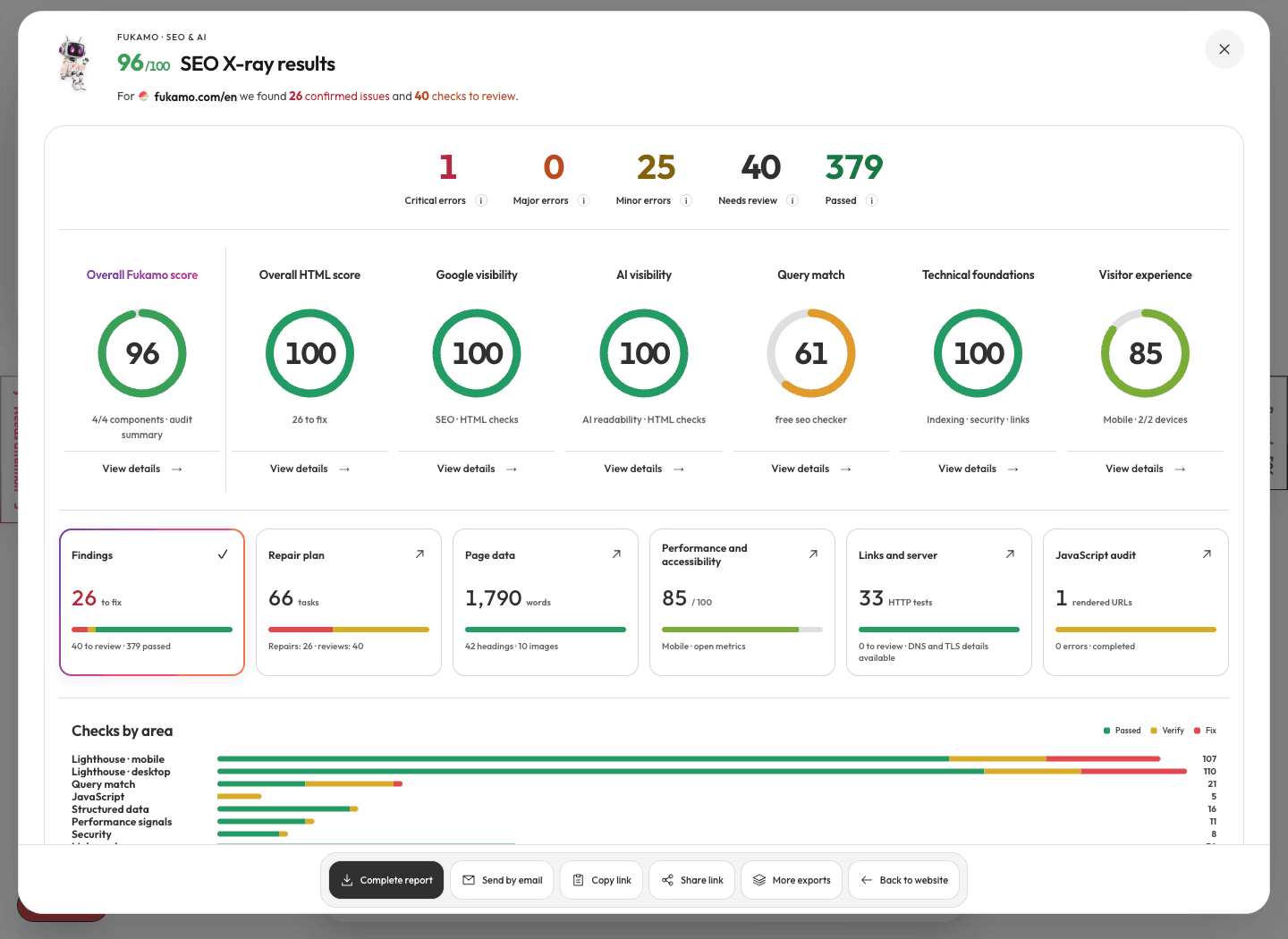
What should an AI citation record contain?
Use one answer to one recorded question as a clear observation unit. Decide whether repeated links count once per answer or as separate links before testing.
- Save exact wording, service, time and language.
- Separate brand mentions from linked citations.
- List failed requests outside completed answers.
How to calculate a citation rate
Five cited answers out of twenty is an illustrative sample result, not market share. Questions naming your brand can change that percentage substantially.
- Group questions by customer decision.
- Keep a stable measurement set after exploration.
- Show completed, failed and excluded observations.
Does the cited page support the AI answer?
A citation is useful when the destination supports the attributed claim. A homepage link beside a specific price can still be misleading.
- Check the exact URL, language and version.
- Classify support as complete, partial or absent.
- Record unavailable sources and ambiguous cases.
How to respond to an inaccurate AI citation
First check whether your own source is accurate. If an old price remains on the site, correct it before treating the answer as an interpretation failure.
- Record the factual correction and its date.
- Repeat the same question under recorded conditions.
- Add visits or sales only with separate supporting evidence.
How to verify the result
Have a second reviewer check a sample of saved answers against the cited pages. Keep missing answers and unsuccessful observations in the dataset; excluding them changes the result’s meaning.
Primary documentation developers.google.com ↗
Frequently asked questions
How do I avoid a misleading AI visibility percentage?
Publish the denominator. Questions, services, languages, and observation period. Distinguish a linked source from a brand mention and a positive recommendation. Repeat the same questions and record changes in conditions. Selecting only successful examples produces an attractive but unusable percentage.
When the task is complete
Each observation retains its question, answer, source, and time. Keep technical auditing separate from model observations and from visits or conversions.
Related SEO guides
Check a specific page.
Fukamo shows findings, evidence and the next step.
679 rules + SEO, AI readability, performance and accessibility measurements for free.