Keyword Relevance Checker
Compare your query with the page title, headings and content.
The phrase is present. Why might the page still miss the intent?
Define the visitor’s task. Booking a service, comparing products or following a tutorial. Choose a URL that can actually meet that need.
What to do step by step
- Choose a public URL that can actually satisfy the need behind the query.
- Enter a natural main phrase; include a location only when the offer serves that location.
- Compare the title, main heading and opening paragraph. They should identify the same service, product or question.
- Separate missing phrases from partial matches. Read synonyms, grammatical variants and context yourself.
- Add useful missing information. Service scope, pricing or its calculation, availability and a clear next action.
- Publish the change and repeat the same audit. Track impressions and clicks separately in Search Console.
How to match your title and H1 to a search query
Teaching example; example.com addresses are illustrative.
Before
<title>About our team</title>
<h1>Our story</h1>
After
<title>Bicycle repair services</title>
<h1>Bicycle repair services</h1>
Enter the query “Bicycle repair”. The title and H1 comparison now show a literal match. Use this wording on a page that actually describes repairs, including service scope and booking details.
A common mistake
A low relevance score is not an instruction to place the query in every image alt, link and heading. Mechanical repetition can make the page harder to read. An exact match cannot rescue a page without the promised answer or service. Do not change a working URL just to insert a keyword; URL changes need a redirect plan.
Try the report before checking your site.
Explore the sample report, then enter your own URL to see findings, HTML evidence and a repair plan for your page.
Run your audit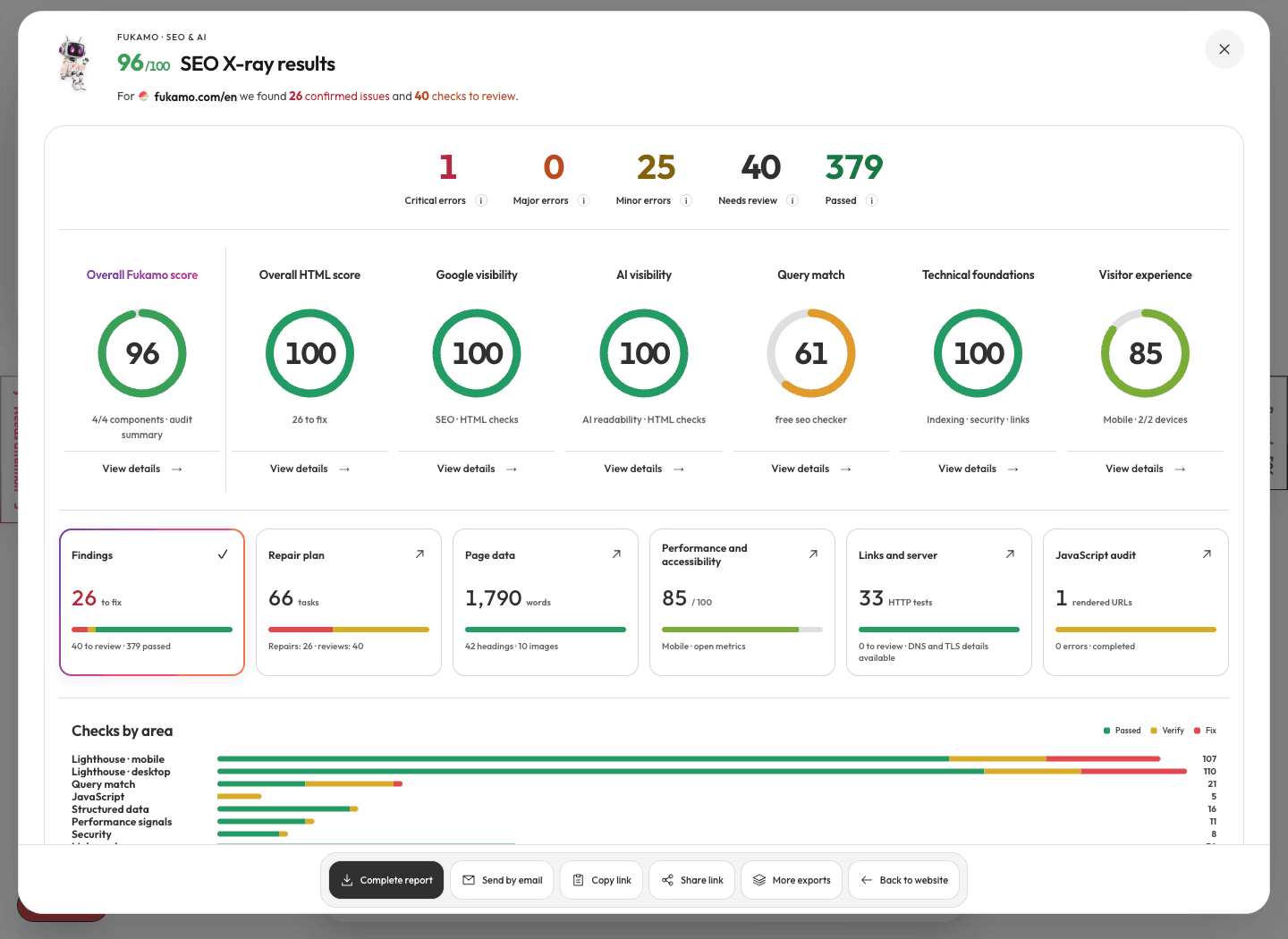
Which page matches the search phrase?
The search phrase should match the task a visitor can complete at the URL. A product, category and tutorial may share words while serving different needs.
- Match “bicycle hire Leeds” with a rental offer, conditions and contact details.
- Do not rewrite a bicycle-repair tutorial as a rental page merely to target another phrase.
How to align the title with the page’s answer
The title, H1 and opening should describe the same offer. Natural variations help when they preserve meaning and make the content easier to understand.
- Support “Bicycle hire in Leeds” with specific bicycle types and a booking method.
- Do not promise a price or condition in the title that visitors cannot find on the page.
What do matched phrase occurrences mean?
The check shows matches in the available text evidence. An occurrence count alone does not establish answer quality, search volume or competitive difficulty.
- Check whether the phrase appears in the main text or only in repeated navigation.
- For missing text, inspect whether JavaScript supplies it and whether the evidence was truncated.
How to check an edit for the same query
Change the specific passage that conflicts with the offer. Then repeat the check with the same query and read the entire page as a customer.
- Add the missing answer or a useful link instead of inserting the phrase into every paragraph.
- Track traffic effects in Search Console; the text-matching result does not measure them.
How to verify the result
Compare each reported surface with the published page. A passed match confirms the tool’s rule, not a Google position. In Search Console, review the page and a related group of queries over time, allowing for seasonality and changes to the search results.
Primary documentation developers.google.com ↗
Frequently asked questions
The phrase is present. Why might the page still miss the intent?
The same words can refer to different needs. Someone shopping needs an offer, price and availability; someone following a tutorial needs instructions. Read the page as a visitor. Can they accomplish the task that led them to search?
Must the exact keyword appear everywhere?
No. Inflections, synonyms and natural word order can express the same intent. An exact match is an observable signal, not a complete semantic assessment. Readers should understand the offer without mechanical repetition of a phrase.
Which query belongs on the homepage and which on another page?
The homepage should explain the main business or product. Evaluate a specific service, product or question against the page that actually addresses it. A narrow query should not be forced onto a general homepage.
When the task is complete
The edit is ready when the title promises what the page delivers, the main heading confirms it and the visitor can find the answer and next step without searching for another destination.
Related SEO guides
Check a specific page.
Fukamo shows findings, evidence and the next step.
679 rules + SEO, AI readability, performance and accessibility measurements for free.