Should every product variation be indexed separately?
Choose a simple product, a variable product, an unavailable item and a category. Identify what a customer must understand before adding anything to the cart.
What to do step by step
- Compare names, prices and availability with the offer.
- Check the main heading and useful product description.
- Review variant URLs and canonical declarations.
- Decide indexing intent for categories and filters.
- Look for conflicting structured data from themes and plugins.
A practical example
The base product is available but one selected size is sold out. A static scan of the base URL may not capture whether the interface updates that state correctly.
A common mistake
An unavailable item does not automatically need deletion. Decide according to return-to-stock plans, replacement options and the page’s value.
Try the report before checking your site.
Explore the sample report, then enter your own URL to see findings, HTML evidence and a repair plan for your page.
Run your audit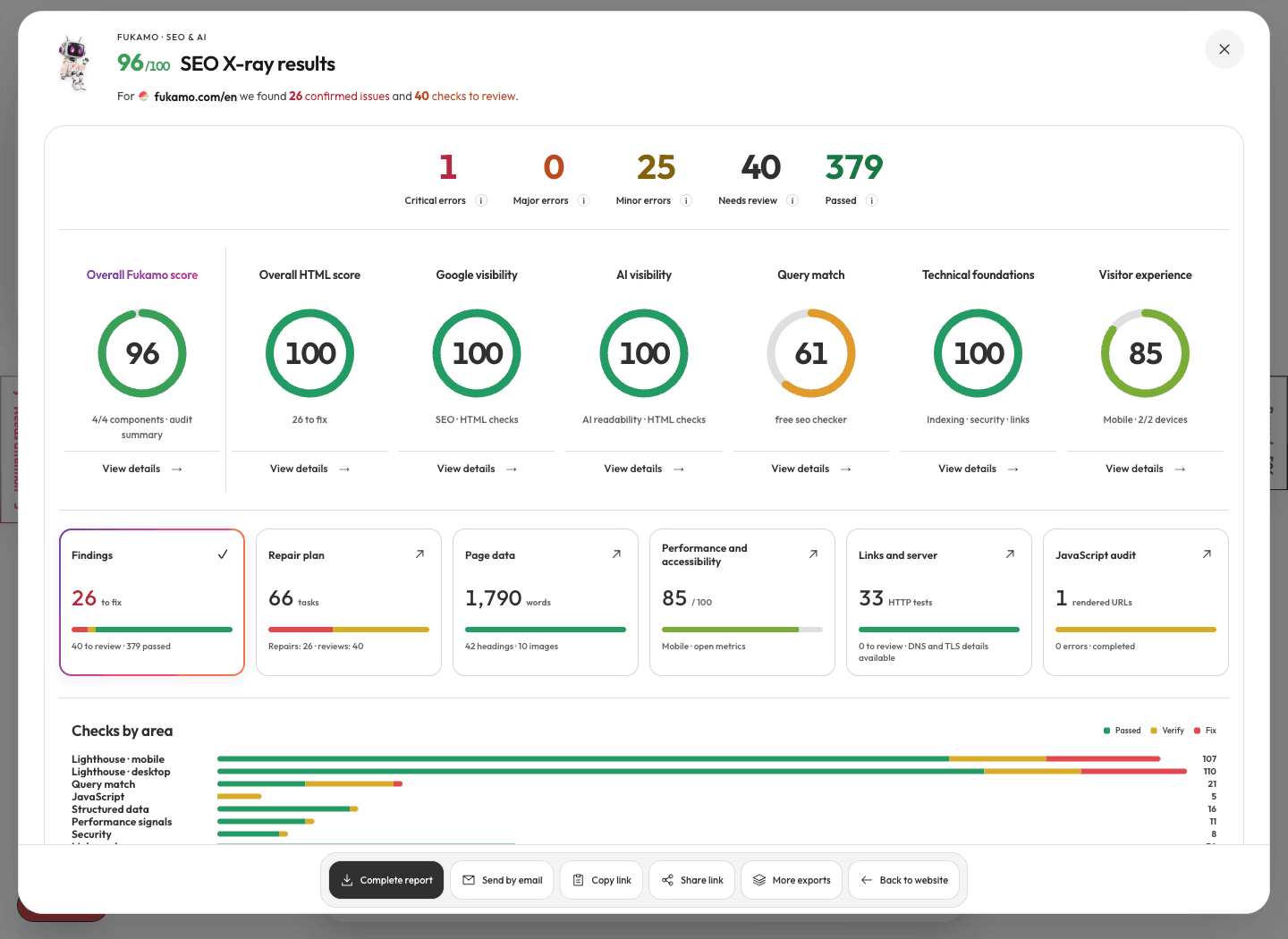
Which WooCommerce product states should you test?
WooCommerce variations can have their own price, stock and image. A carefully prepared simple product does not test the variable-product template.
- Inspect a simple product and a variable product.
- Select an unavailable combination.
- Open a shared variation URL in a fresh session.
Do product prices and availability match everywhere?
Compare visible price and availability with structured data and product cards. Different prices may describe legitimate variants; conflicting values for the same offer need investigation.
- Name the affected SKU and variation.
- Trace the value to its import, plugin or editor.
- Retest after the next ordinary inventory update.
How to make product categories useful for shoppers
A boot category can distinguish fit and intended use before showing individual models. Sorting by price serves a different purpose from a stable landing page.
- Link meaningful subcategories to available inventory.
- Compare the base category and an empty filter.
- Support technical claims with actual product specifications.
What to do with sold-out and discontinued products
Zero stock alone does not decide whether a URL should disappear. A temporary shortage, retired model and useful reference page need different responses.
- State the actual availability and next step.
- Redirect only to a relevant replacement.
- Update category cards and related-product links too.
How to verify the result
Repeat the same variant selection and compare visible price, stock and structured data. Then test cart behavior separately, including the sold-out variant; a correct base product response covers only one state.
Primary documentation woocommerce.com ↗
Frequently asked questions
Should every product variation be indexed separately?
Decide based on distinct value and search intent. A color parameter may not need its own indexed page. A genuinely different offer with original content may warrant another policy. Verify that price, availability, and structured data match the selected variation.
When the task is complete
Parameter combinations do not create an unintended infinite URL space. Representative variations have consistent canonicals and show accurate purchasing information.
Related SEO guides
Check a specific page.
Fukamo shows findings, evidence and the next step.
679 rules + SEO, AI readability, performance and accessibility measurements for free.