How do I catch an SEO defect a successful build misses?
Map public content, user results, internal tools and APIs first. Each needs an explicit indexing decision. Temporary audit results do not belong in a content sitemap.
What to do step by step
A practical example
A sitemap is generated without SITE_URL during build. Setting the variable only in the running server may not update a prerendered file. Test the actual deployment output.
A common mistake
Client-side metadata effects can be late or inconsistent. A fallback page returning 200 for an unknown slug hides a routing problem.
Try the report before checking your site.
Explore the sample report, then enter your own URL to see findings, HTML evidence and a repair plan for your page.
Run your audit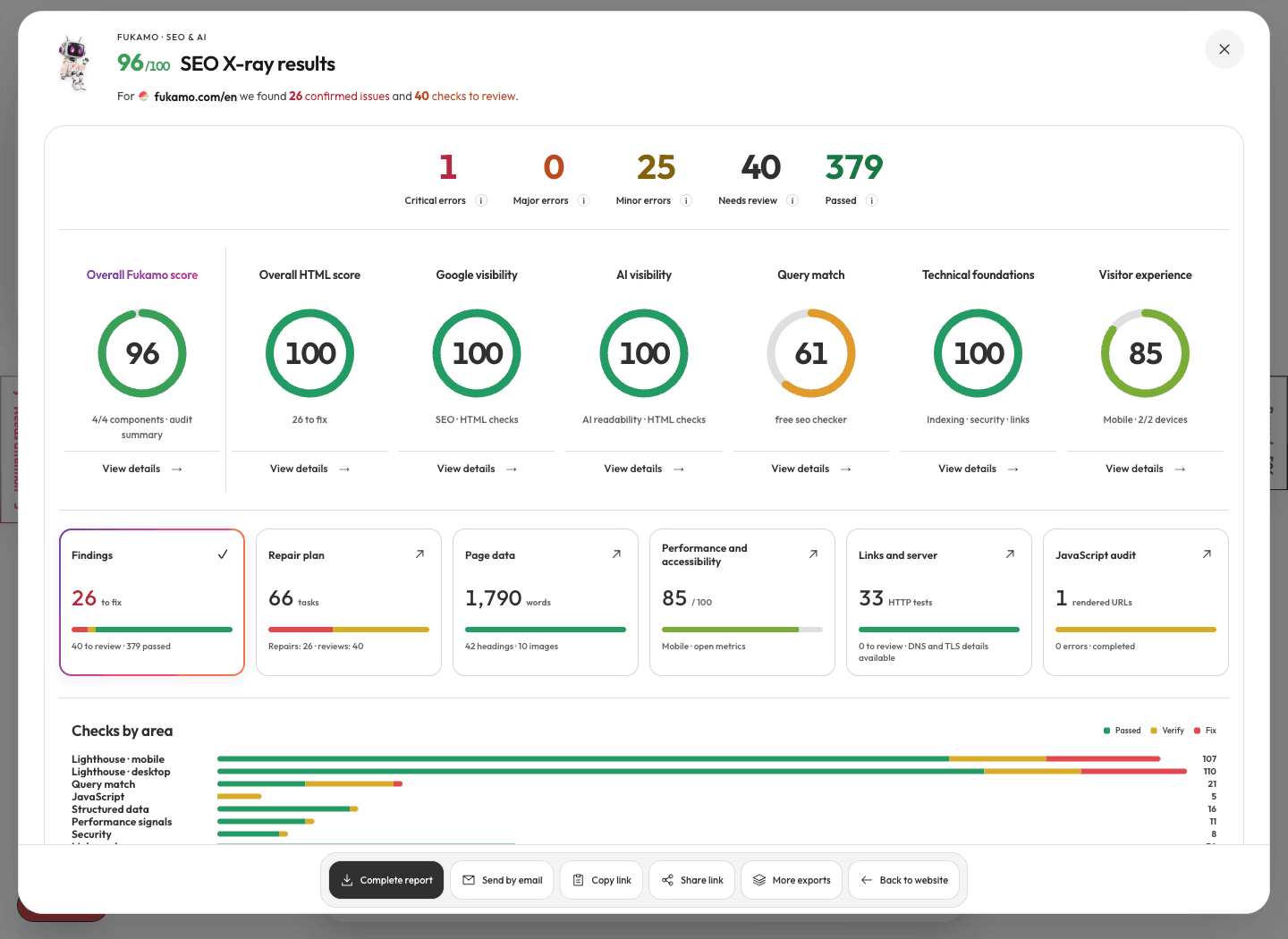
Which Next.js routes should be indexed?
Public guides, temporary results and private dashboards have different purposes. Record content, status and indexing policy before treating a finding as a defect.
- Test a published record and an unknown slug.
- Include an empty result and a language counterpart.
- Keep private destinations out of public sitemaps.
How layouts and streaming affect Next.js metadata
Next.js supports metadata inheritance and streaming. Inspect the completed response and the installed version’s behavior before concluding that a tag is missing.
- Check repeated branding from nested title templates.
- Generate canonical URLs from trusted public origins.
- Test social-image destinations in production.
Source Next.js · metadata ↗
How to test not-found responses in Next.js
A page saying “not found” is not enough evidence. Next.js documents 200 for streamed not-found responses and 404 for non-streamed responses; verify the actual response and indexing signals.
- Check a genuinely unknown slug.
- Inspect redirect targets for old addresses.
- Test failure of the route’s data source.
Source Next.js · not-found ↗
Why build and runtime settings can produce different URLs
A generated sitemap can retain a wrong origin after the runtime variable changes. Check when each artifact is generated and what production actually serves.
- Compare sitemap, canonical and language alternates.
- Check deployment version and relevant cache layers.
- Retest a working route alongside the repaired one.
How to verify the result
Run the production build and request a valid route, an unknown slug and a redirect. Inspect status, metadata and streamed output under the deployed configuration; save the framework version with the evidence.
Primary documentation nextjs.org ↗
Frequently asked questions
How do I catch an SEO defect a successful build misses?
Test actual HTTP responses for representative routes, including a nonexistent page. Inspect inherited metadata, absolute URLs, and server-delivered content. Production canonicals may depend on build-time configuration; a correct runtime value may not repair a previously generated document.
When the task is complete
Both build and runtime checks pass. Published canonicals, alternates, and images have accessible destinations, and missing routes do not return a misleading successful page.
Related SEO guides
Check a specific page.
Fukamo shows findings, evidence and the next step.
679 rules + SEO, AI readability, performance and accessibility measurements for free.