Should I send a developer everything in the report?
Start with the summary and recommended first step. Read evidence and remediation together. Add page intent before assigning a context-dependent recommendation to a developer.
What to do step by step
- Check the URL and scan time.
- Read confirmed failures in severity order.
- Record decisions for manual-review items.
- Obtain missing evidence instead of counting it as success.
- Keep passes as a reference for properties to preserve.
- Compare the same rule IDs after fixing.
A practical example
Two errors and nineteen reviews do not mean twenty-one confirmed errors. Fix the two proven problems, then assess the nineteen suggestions with context.
A common mistake
Occurrences are not independent score deductions. A shared template issue can affect several elements while representing one rule failure.
Try the report before checking your site.
Explore the sample report, then enter your own URL to see findings, HTML evidence and a repair plan for your page.
Run your audit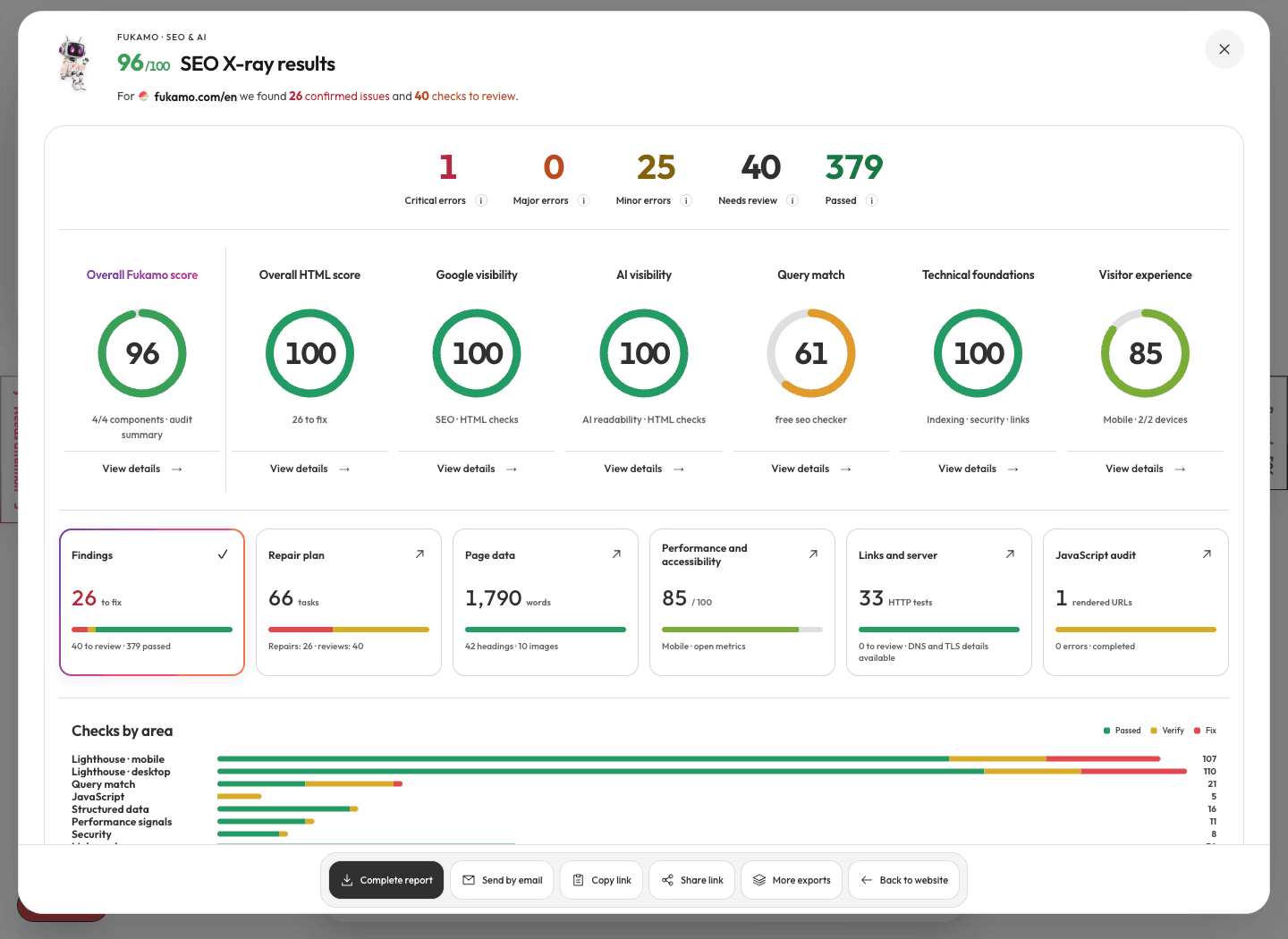
What should you check before reading findings?
Check the address, time and audit scope in the summary. If the title and main text belong to a security challenge, the findings describe that response instead of the intended page.
- Compare the final URL after redirects with the address you meant to inspect.
- If they differ, inspect the live site and fetched evidence before rewriting content in bulk.
How to read evidence and recommendations
Evidence states what the check found. Advice proposes a next step that must still fit the specific page.
- For an H1, inspect the element found and the heading’s purpose.
- For a canonical, decide the preferred URL using the actual content variants.
How to identify a shared cause of failures
The same finding across many products may originate in a shared template. Check a correct product too, to distinguish a template defect from missing data.
- Give the developer the common cause and affected examples.
- Assign manual reviews to someone who knows the offer; keep unavailable measurements as separate tasks.
How to decide whether a repair is complete
An SEO checklist closes a task with the specific output expected after the repair. A higher score without specific evidence cannot close the work.
- For example, every service returns its own H1; tested on two services and one previously correct page.
- After deployment, compare the same rule ID and fresh server response, then complete the visitor’s task.
How to verify the result
Fukamo’s PDF separates action sections from passing checks and reference material. Give the developer relevant context alongside the file.
Primary documentation developers.google.com ↗
Frequently asked questions
Should I send a developer everything in the report?
Share the complete document for context, but build tasks from confirmed causes and relevant reviews. Passing items are reference. Non-applicable rules are not missing features to implement. A manual review can legitimately end with a documented decision to change nothing.
When the task is complete
The handoff distinguishes fixes, decisions, and missing evidence. Every completed task records what changed or why no change was required.
Related SEO guides
Check a specific page.
Fukamo shows findings, evidence and the next step.
679 rules + SEO, AI readability, performance and accessibility measurements for free.