When can I mark an SEO checklist item complete?
Select representative URLs and record intended indexability, reader purpose and ownership. Otherwise small checks can become an endless list without a meaningful outcome.
What to do step by step
- Check access, status and redirect chains.
- Align robots, noindex and canonical with page intent.
- Match title, H1 and content to the same need.
- Verify useful destinations and link labels.
- Supplement automated checks with accessibility and performance tests.
- Retest the same rule after publishing.
A practical example
Task. Correct a service canonical. Owner. Developer. Evidence. Old and new head. Done. Appropriate destination, sitemap consistency and no regression on other services.
A common mistake
“SEO done” is not an acceptance criterion. A past pass may change after a redesign, but unchanged passing checks are not a new daily manual workload.
Try the report before checking your site.
Explore the sample report, then enter your own URL to see findings, HTML evidence and a repair plan for your page.
Run your audit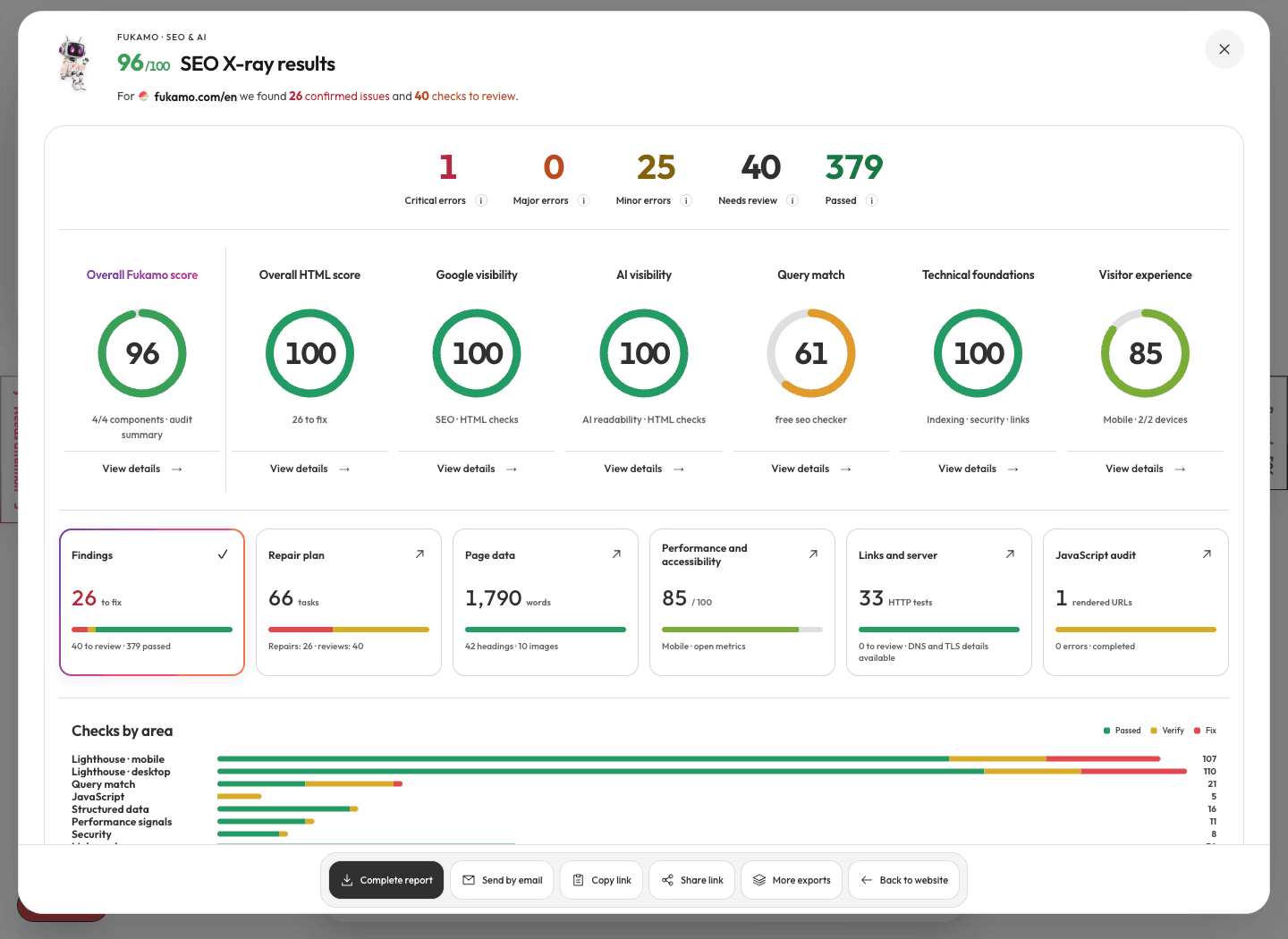
Which pages belong in an SEO checklist?
Start with page types. Service, product, article or contact. A representative sample should expose output differences, rather than cover only an attractive homepage.
- For each type, choose an ordinary URL and a case with a long title or missing image.
- Check language versions separately, including the links between them.
How to write a verifiable checklist item
“SEO complete” cannot be verified. Use a specific expectation, such as the service title matching its own name and offer.
- Record the URL, expectation, result, evidence and owner.
- Name an approver for contextual questions; an outstanding decision is not a pass.
In what order should you check a website?
First confirm that the correct page is accessible. Then check indexing intent, content and usability. Fixing a title has little value if visitors receive a maintenance page.
- Assign a blocking problem to someone who controls the relevant template or server.
- Supplement automated checks with a mobile booking and keyboard navigation through the form.
When is an SEO task complete?
Close the checklist with repeatable evidence from the public URL. Keep passing results as references for the next change to the same template.
- Test both the repaired case and a previously correct page.
- Reopen relevant checks during a migration or template change instead of manually repeating the entire list every day.
How to verify the result
Use Fukamo’s separate errors, reviews and successes. Add the external data and decisions that a public scan cannot obtain.
Primary documentation developers.google.com ↗
Frequently asked questions
When can I mark an SEO checklist item complete?
A checkmark should mean a verified outcome. Retain the URL, evidence, and verification date. Keep not-applicable separate from passing. Missing access or data requires an evidence-gathering task rather than an automatic green result.
When the task is complete
Another person can repeat the check from retained evidence. Use the same scope before and after deployment so comparisons do not hide omitted items.
Related SEO guides
Check a specific page.
Fukamo shows findings, evidence and the next step.
679 rules + SEO, AI readability, performance and accessibility measurements for free.