Image SEO Checker
Check alt text, image sources, dimensions and loading declarations.
Does every image need a long, keyword-rich alt attribute?
Assess the image’s purpose in its particular location. A repair photo may explain a procedure, decorate a section or act as a link; each use needs a different text alternative.
For an above-the-fold photograph, also inspect Core Web Vitals. Dimensions reserve space and loading affects LCP. Open Graph needs its own sharing image. Accessibility determines whether the image needs a description or empty alt text.
What to do step by step
- Decide what information would be lost without the image.
- Write alt text for that purpose without keyword lists.
- Check the source and an appropriate responsive size.
- Reserve space using dimensions or aspect ratio.
- Review lazy loading according to position and importance.
How to write alt text for a product image
Teaching example; example.com addresses are illustrative.
Before
<img src="city-bike.jpg" width="800" height="600">After
<img src="city-bike.jpg" alt="Blue city bicycle with a rear rack" width="800" height="600">The image-alt check flags the missing attribute. The revised description helps someone who cannot see the photograph. An empty alt="" is appropriate for decoration; this example shows a product.
A common mistake
Identical alt text on every photo fills an attribute without explaining the images. A static rule also cannot verify that the description is factually accurate.
Try the report before checking your site.
Explore the sample report, then enter your own URL to see findings, HTML evidence and a repair plan for your page.
Run your audit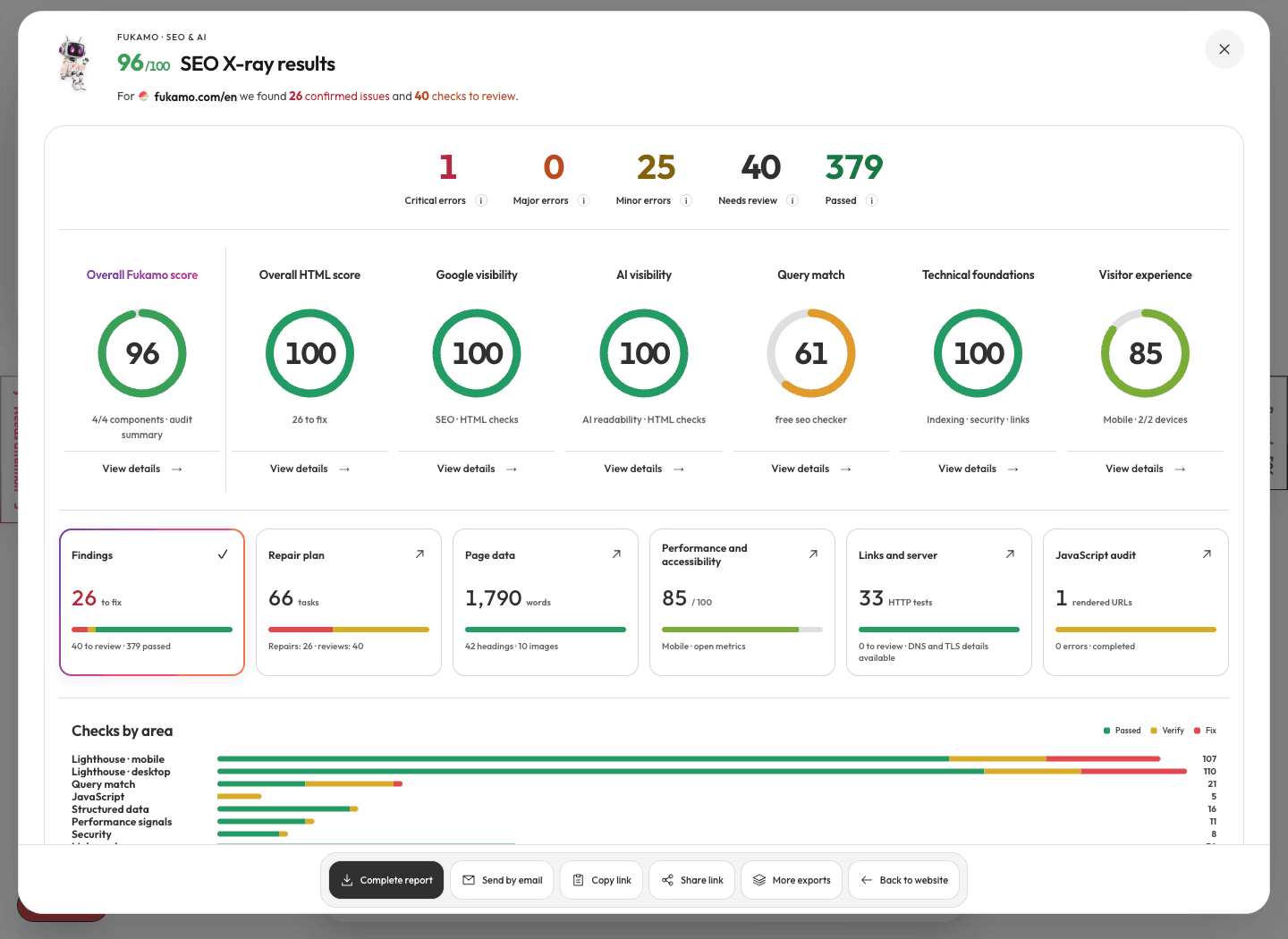
When an image needs alt text or an empty alt
The same photograph can explain a procedure or simply decorate an introduction. Write its alternative according to the information that would otherwise be missing here.
- Give an informative image a concise, factual alternative.
- Keep alt="" for a purely decorative image.
- Explain important data from a complex chart in nearby text as well.
How to name an image link or button
When a logo is the only content of a homepage link, its alternative supplies the link’s name. Describing an icon’s colour or shape does not explain a button’s action.
- Check the announced name of a link containing only an image.
- Make the name explain its destination or action.
- Avoid a redundant icon description when adjacent text already names the control.
How to size images without causing layout shifts
A small preview does not need the original multi-megapixel photograph. It still needs to remain clear on a dense display, so evaluate the actual rendered size.
- Provide appropriate responsive variants and an accurate sizes value.
- Reserve space using dimensions or an aspect ratio.
- Check detail and unnecessary transfer size on mobile.
When to use lazy loading for images
An important image in the initial viewport may be the LCP element. Unnecessarily delaying it slows the visible result; assess images further down the page separately.
- Do not automatically lazy-load the main visible image.
- Consider deferred loading for images below the initial viewport.
- Verify the result with Core Web Vitals measurement and the rendered page.
Source web.dev — optimize LCP ↗
How to verify the result
Check markup, mobile loading and the accessible name of linked images. Use performance measurement for speed and human review for visual meaning.
Primary documentation www.w3.org ↗
Frequently asked questions
Does every image need a long, keyword-rich alt attribute?
Alt text depends on purpose. Informative images need a concise equivalent, decorative images usually need empty alt text, and linked images need the destination or function described. Repeated keywords make listening harder. For product variants, describe a visible difference such as color when it matters to the buying decision.
When the task is complete
Check whether the page still makes sense without images. Reserve layout space and verify main-image loading separately; file size alone cannot establish a good LCP result.
Related SEO guides
Check a specific page.
Fukamo shows findings, evidence and the next step.
679 rules + SEO, AI readability, performance and accessibility measurements for free.