Why did switching SEO plugins create two canonical tags?
After a theme or SEO plugin change, test the homepage, a page, an article and an archive. A correct template does not prove the other templates are correct.
What to do step by step
- Open Dashboard → Settings → Reading → Search engine visibility. For a public site intended for search, clear “Discourage search engines from indexing this site”, save, and inspect the public robots meta tag. Keep development sites protected according to their intended access policy.
- Open Plugins → Installed Plugins and identify the SEO provider, such as Yoast SEO, Rank Math or SEOPress. Record which provider owns titles, canonical URLs and structured data before changing anything. Inspect source HTML for duplicate title or canonical elements.
- Open a page in the editor and use its document outline to compare heading levels with the public output. If the theme already prints the post title as H1, start the article’s sections at H2.
- Open /wp-sitemap.xml on the site. WordPress core provides this location from version 5.5; an SEO plugin may replace the sitemap. Inspect the actual response and the sitemap declared in robots.txt before submitting a URL to Search Console.
- Review a category archive, tag archive and author archive. Keep collections that help a visitor navigate distinct useful articles. Check the corresponding indexing directives, canonical and sitemap entries.
- After a repair, clear the relevant page cache and request the public URL while signed out. Compare the specific changed tag and a second page of the same template.
A practical example
The theme prints the article title as H1 and the editor adds another main heading. Resolve the template and editorial convention instead of hiding text with CSS.
A common mistake
A green plugin indicator does not prove correct public HTML or indexing. Multiple SEO plugins can create conflicting declarations.
Try the report before checking your site.
Explore the sample report, then enter your own URL to see findings, HTML evidence and a repair plan for your page.
Run your audit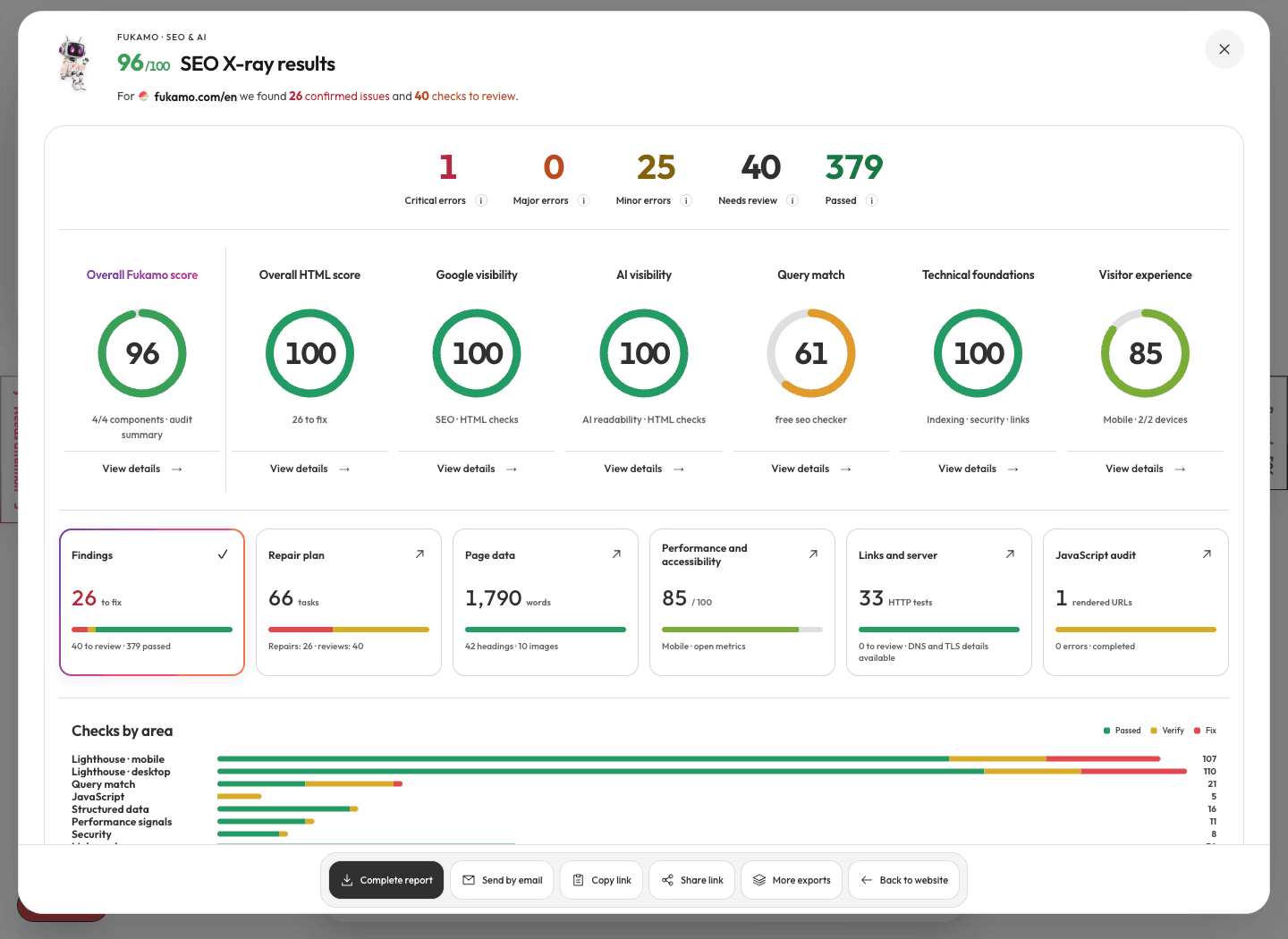
Where to check WordPress indexing settings
In Settings → Reading, check “Discourage search engines from indexing this site” against the site’s intended purpose. WordPress documents this as a request to search engines, not access protection.
- Public launch — inspect accidental indexing restrictions.
- Private material — require actual access controls.
- After changing the setting, inspect the public HTML.
How to prevent duplicate metadata from plugins
If the business name appears twice in a title, compare two pages before rewriting either. A shared title pattern may be responsible.
- Identify what the theme and SEO plugin each output.
- Test a manual title override and a default title.
- Compare schema values, not merely object counts.
What to check in WordPress archives and blocks
A useful category organizes related guides; a one-post tag may add little. Archive purpose and heading structure need editorial decisions, not blanket settings.
- Check whether the theme already prints the article H1.
- Inspect older posts after a reusable-block change.
- Keep useful navigation when archive indexing changes.
Why WordPress SEO checks need a signed-out session
A saved change is complete when ordinary visitors receive it. Login state, a page cache or a CDN can explain an old description in the audit.
How to verify the result
Open the changed post and another post from the same template while signed out. Check the exact tag after clearing the relevant cache; retain the plugin and theme versions with the result.
Primary documentation wordpress.org ↗
WordPress — locating the XML sitemap ↗
Frequently asked questions
Why did switching SEO plugins create two canonical tags?
A theme, plugin, and custom code can each produce metadata. Identify one responsible layer and remove the conflict there. Adding a third tag is not a fix. Verify a post, a page, and an archive rather than relying on the admin preview.
When the task is complete
After relevant cache refresh, published HTML contains one correct canonical. Archives and pagination still work, and disabling a plugin has not removed necessary redirects.
Related SEO guides
Check a specific page.
Fukamo shows findings, evidence and the next step.
679 rules + SEO, AI readability, performance and accessibility measurements for free.