Which technical SEO issue should you fix first?
Start with URLs that bring orders or enquiries. Restore access before changing indexing directives. Compare an ordinary page and an intentional exception using the same template before applying a site-wide repair.
What to do step by step
- Record the purpose of each URL and whether it should be indexed.
- Check the final HTTP response and redirect path.
- Compare robots directives and canonical declarations with that purpose.
- Inspect headings, links and server HTML; verify dynamic content separately.
- Fix the shared cause and retest multiple affected pages.
A practical example
A product page still carries the noindex directive from staging. Remove the unintended production restriction before evaluating its organic traffic or polishing its description.
A common mistake
A footer error repeated on a hundred URLs may require one template fix. Conversely, one passing page does not prove that every template works.
Try the report before checking your site.
Explore the sample report, then enter your own URL to see findings, HTML evidence and a repair plan for your page.
Run your audit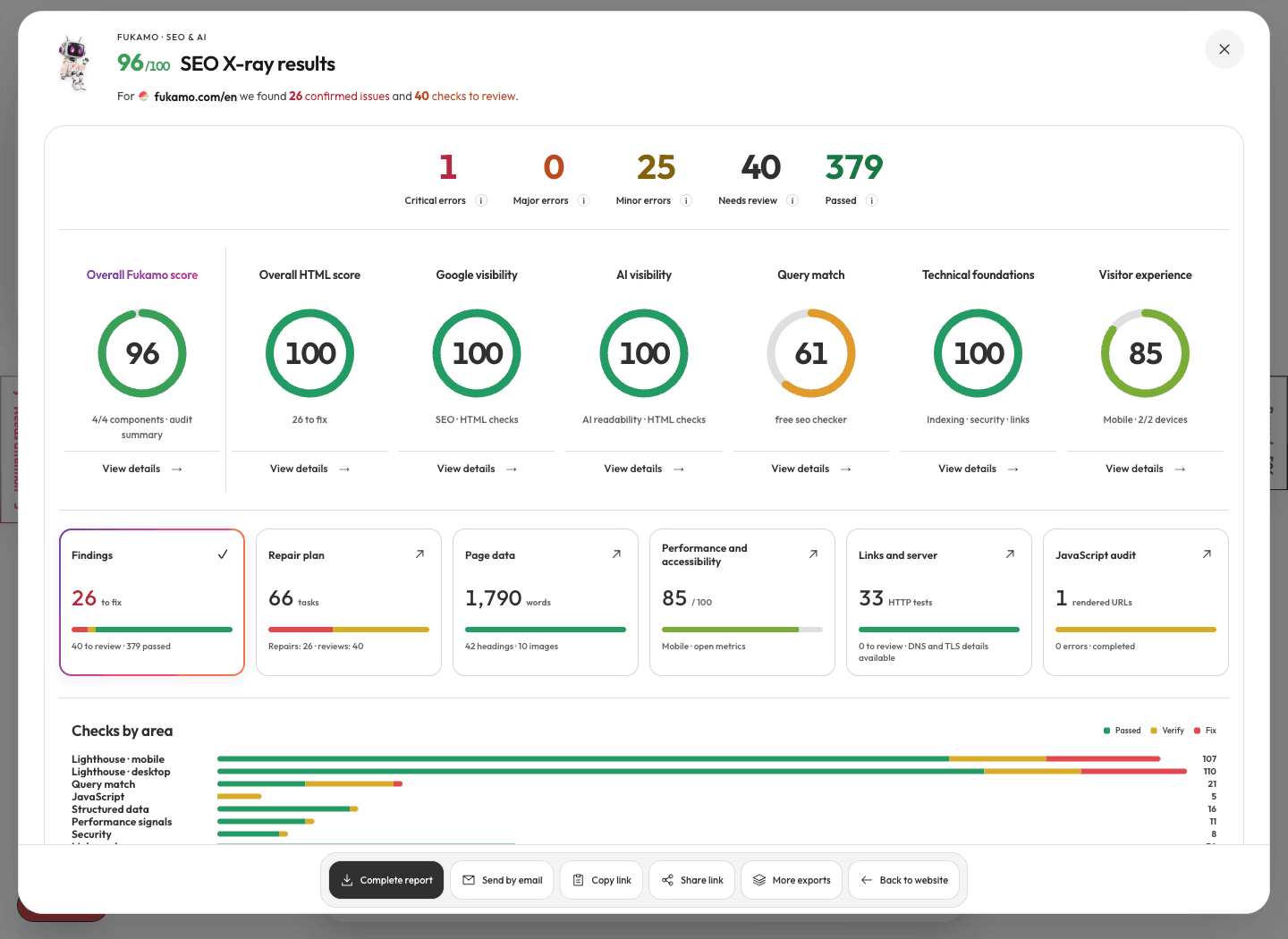
Which pages to include in a technical SEO audit
Start with pages that bring enquiries or sales. Include an ordinary case and an exception; a clean homepage says little about a broken product template.
- Test a service, category, product and article that actually exist on your site.
- Include an unavailable product or intentionally excluded page.
- Record which URLs were checked before describing the issue as site-wide.
How to document a technical issue for a developer
“The page returned 503 at 14:20” is an observation. “The hosting is too small” is a hypothesis. Keep them separate until logs or another test confirm the cause.
- Save the exact URL, response status and relevant HTML or header.
- For intermittent failures, record login state and whether a cache was involved.
- Assign the repair to the owner of the template, content or server rule.
Which technical SEO issues to fix first
A title rewrite will not help a service page that cannot load. Order repairs by the visitor journey and technical dependencies, rather than by the number of red rows.
- Restore access before investigating website indexing.
- Resolve an unintended noindex or conflicting canonical URL before rewriting snippets.
- Treat an empty decorative alt as a context check, not an urgent defect.
How to verify a fix across page templates
A repair is complete when the public response behaves as intended. Improved rankings are a separate outcome, with a different measurement period.
- Retest the original URL and another page using the same template.
- Keep an intentional exception unchanged, such as a noindex checkout page.
- For a URL move, verify redirects, internal links and the XML sitemap together.
How to verify the result
In Fukamo, review the checked URLs and the status of each supplementary measurement. Retest the repaired template, then use Search Console to confirm Google’s indexing decision.
Primary documentation developers.google.com ↗
Frequently asked questions
Which technical SEO issue should you fix first?
Start with important pages that cannot be retrieved or indexed as intended. Next resolve conflicting canonicals and broken navigation paths, then improve presentation. When a shared template causes the same issue on many URLs, create one root-cause task with affected examples rather than treating every occurrence as a separate project.
When the task is complete
Save response status, indexing directives, and canonical evidence before and after deployment. Retest a URL from each affected page type. A passing homepage does not verify a product template.
Related SEO guides
Check a specific page.
Fukamo shows findings, evidence and the next step.
679 rules + SEO, AI readability, performance and accessibility measurements for free.