Internal Link Checker
Check on-page anchors and HTTP errors or redirects in a sample of internal targets.
Is adding an important page to a large footer enough?
Identify a related explanation and practical next step for each important page. Place the link in the relevant passage; a general footer list does not supply the same context.
What to do step by step
A practical example
A noindex guide can link to robots.txt when explaining access and to indexing when explaining verification. It does not need links to every platform the product supports.
A common mistake
A footer containing every URL does not replace contextual navigation. Reusing the same anchor for unrelated destinations makes the next step harder to predict.
Try the report before checking your site.
Explore the sample report, then enter your own URL to see findings, HTML evidence and a repair plan for your page.
Run your audit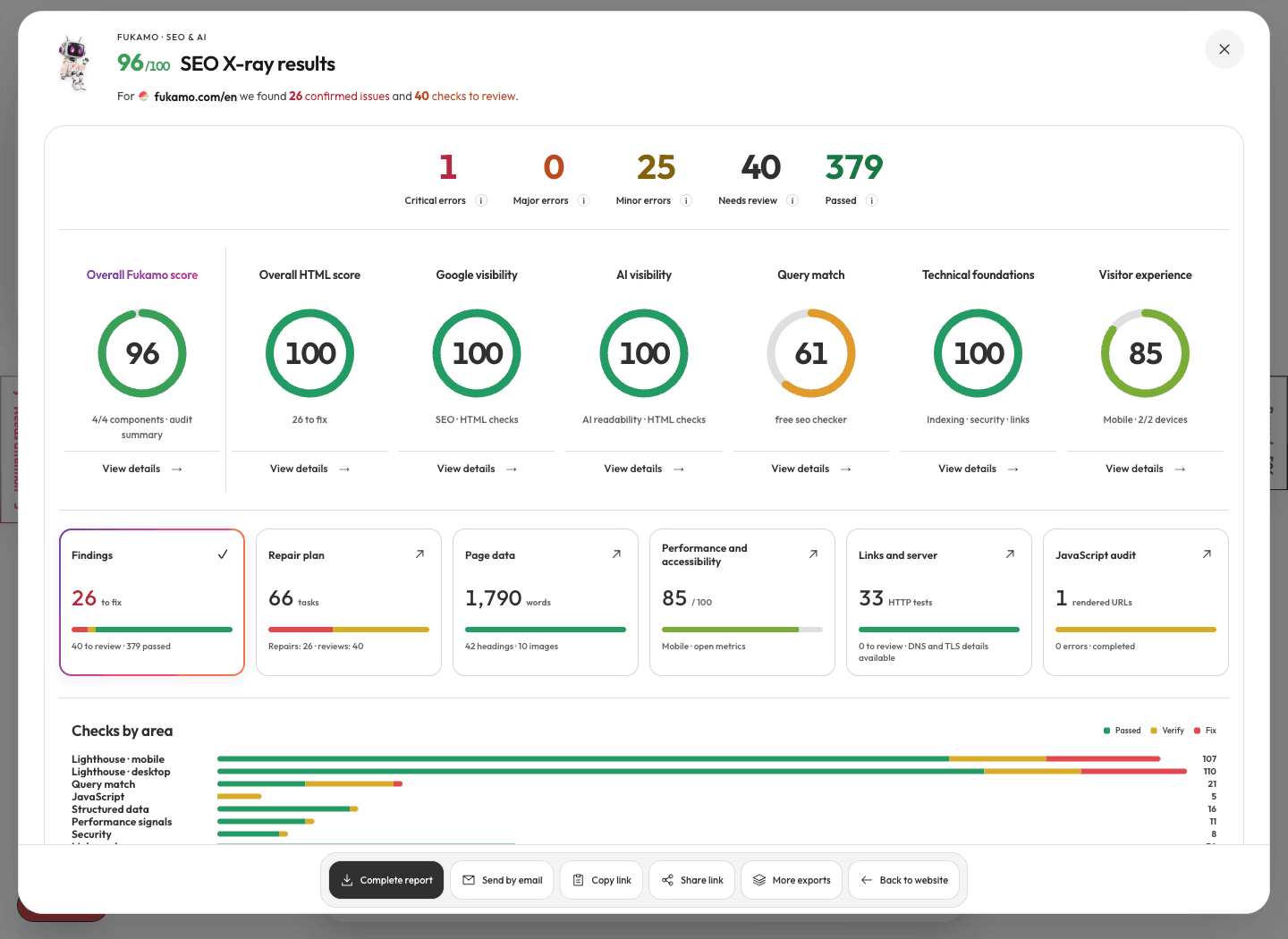
Where to add links to related content
Someone reading about noindex may need robots.txt guidance or an indexing check. Place the link where that distinction matters rather than in an unrelated list.
- Link to a prerequisite or the next practical procedure.
- Offer a service where it naturally addresses the problem being discussed.
- Do not add a link merely because its title shares a keyword.
How to find orphan pages without internal links
One fetched page cannot establish that another page has no incoming links. Finding orphans requires both a published-content inventory and a crawl of discoverable links.
- Compare a CMS export with URLs discovered through links.
- Distinguish an isolated page from one excluded by the crawl’s scope.
- Connect important content from an accessible, closely related page.
How to maintain anchor text and destination URLs
The same label for three different destinations makes navigation harder. A concise label works when readers can still identify the particular question or service.
- Link directly to the preferred canonical URL.
- Update old anchor text when a service is renamed.
- Use a real link with href for navigation rather than only a click handler.
How to check the path from an article to the next step
A link count does not show whether a customer can find booking information. Start from a real entry article and follow its links without using site search.
- Check the path to a related explanation and an appropriate contact.
- Remove loops that keep repeating the same information.
- During migration, also review navigation and content-template links.
How to verify the result
A one-page audit describes links on that page. Orphan pages and complete crawl depth require a full URL inventory and site-wide link graph.
Primary documentation developers.google.com ↗
Frequently asked questions
Is adding an important page to a large footer enough?
A footer helps discovery but does not always explain relevance. Add links where readers need a next answer. A problem to its solution, a comparison to a service, or a category to a product. Use descriptive text and a direct destination. Avoid linking every paragraph to every offer.
When the task is complete
A relevant page contains a regular HTML link to the priority URL. Readers can predict the destination before clicking. A separate full-site crawl is needed to identify orphan pages across the inventory.
Related SEO guides
Check a specific page.
Fukamo shows findings, evidence and the next step.
679 rules + SEO, AI readability, performance and accessibility measurements for free.