How do I identify pages competing for the same intent?
Write down the question that lets the visitor take the next step. On a service page, that means suitability and booking; in a tutorial, it means performing and verifying a particular repair.
What to do step by step
- Write the decision the page helps someone make.
- Align the title, H1 and introduction without mechanical repetition.
- Add a concrete method, limitation, example or original evidence.
- Organise subheadings around reader questions.
- Remove passages that add length without information.
A practical example
A coffee machine repair page should explain supported equipment, diagnosis, intake conditions and contact. A generic history of coffee does not answer these practical questions.
A common mistake
Keyword density is not the goal. A short, precise answer can be more useful than a long page of repeated phrases. An HTML audit cannot judge reader satisfaction for you.
Try the report before checking your site.
Explore the sample report, then enter your own URL to see findings, HTML evidence and a repair plan for your page.
Run your audit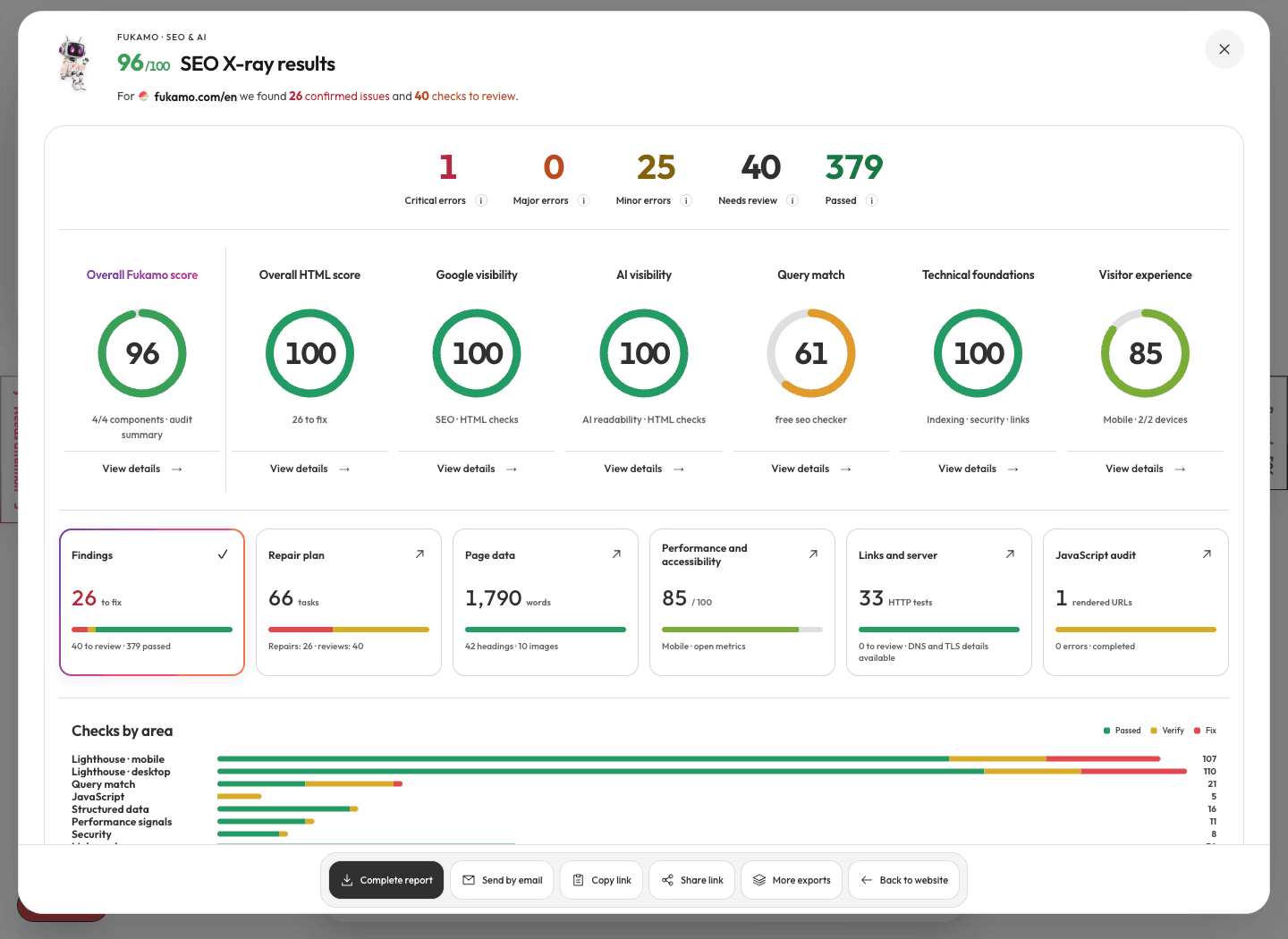
How to identify the page’s purpose and visitor intent
A repair page should help someone establish whether you service their equipment and what to do next. An opening history of the industry does not answer either question.
- Choose a primary need — book, compare or understand a process.
- State conditions that could change the customer’s decision.
- When no fixed price exists, explain how a quote is prepared.
How to align the title with the page content
The title tag and H1 can use different wording, but they should describe the same offer. Add a location or brand only when the page provides relevant information about it.
- For a local service, explain the intake location or service area.
- For a comparison, state criteria and which option suits which situation.
- For a tutorial, show an executable step and how to verify it.
- Make headings organise real reader questions rather than repeat a keyword.
What to use instead of vague marketing claims
“We provide a professional service” offers little help in evaluating a repair shop. A concrete approval process or condition for contacting the customer is more useful.
- Describe your actual process without invented results or testimonials.
- Support a technical claim with a source that addresses that claim.
- Remove paragraphs that only repeat the heading or the preceding text.
How to check whether your content is clear and useful
Ask someone unfamiliar with the offer to read it. If you need to explain an important condition afterwards, other visitors may be missing it too.
- Ask them to identify the offer, its limitations and the next step.
- Check that internal links lead to the detail needed for that decision.
- Track relevant enquiries and completed contacts rather than word count alone.
How to verify the result
Fukamo checks technical structure and available signals. Assess relevance against the real offer, then monitor meaningful queries and conversions.
Primary documentation developers.google.com ↗
Frequently asked questions
How do I identify pages competing for the same intent?
Compare the audience and decision each page supports. Similar keywords do not necessarily mean duplicate intent. The problem is two interchangeable answers with no clear reason to choose either. Compare queries and landing pages in Search Console, then decide whether to consolidate based on content rather than one shared phrase.
When the task is complete
Each remaining URL has a distinct purpose, supporting details, and next step. When consolidating, preserve useful information and redirect the old URL to a relevant replacement.
Related SEO guides
Check a specific page.
Fukamo shows findings, evidence and the next step.
679 rules + SEO, AI readability, performance and accessibility measurements for free.