How do I avoid handing over hundreds of duplicate tasks?
Agree on URLs, templates and content ownership before reviewing. Otherwise a technical suggestion can become a dispute about work that was never in scope.
For a repair handoff, attach the PDF reports and agreed methodology. If the same headings are missing across several services, create one template task with the affected URLs. Retest each affected template after release.
What to do step by step
- Select and record representative template URLs.
- Separate confirmed errors from client decisions.
- Assign an owner and verification method.
- Send the report with context through an appropriate channel.
- Retest the same rules after deployment.
A practical example
A missing heading belongs to a developer if the template omits it, or to an editor if the content field was never filled. The symptom alone does not identify the owner.
A common mistake
One URL is not a complete project assessment. Finding counts are not effort estimates, particularly when several findings share one template cause.
Try the report before checking your site.
Explore the sample report, then enter your own URL to see findings, HTML evidence and a repair plan for your page.
Run your audit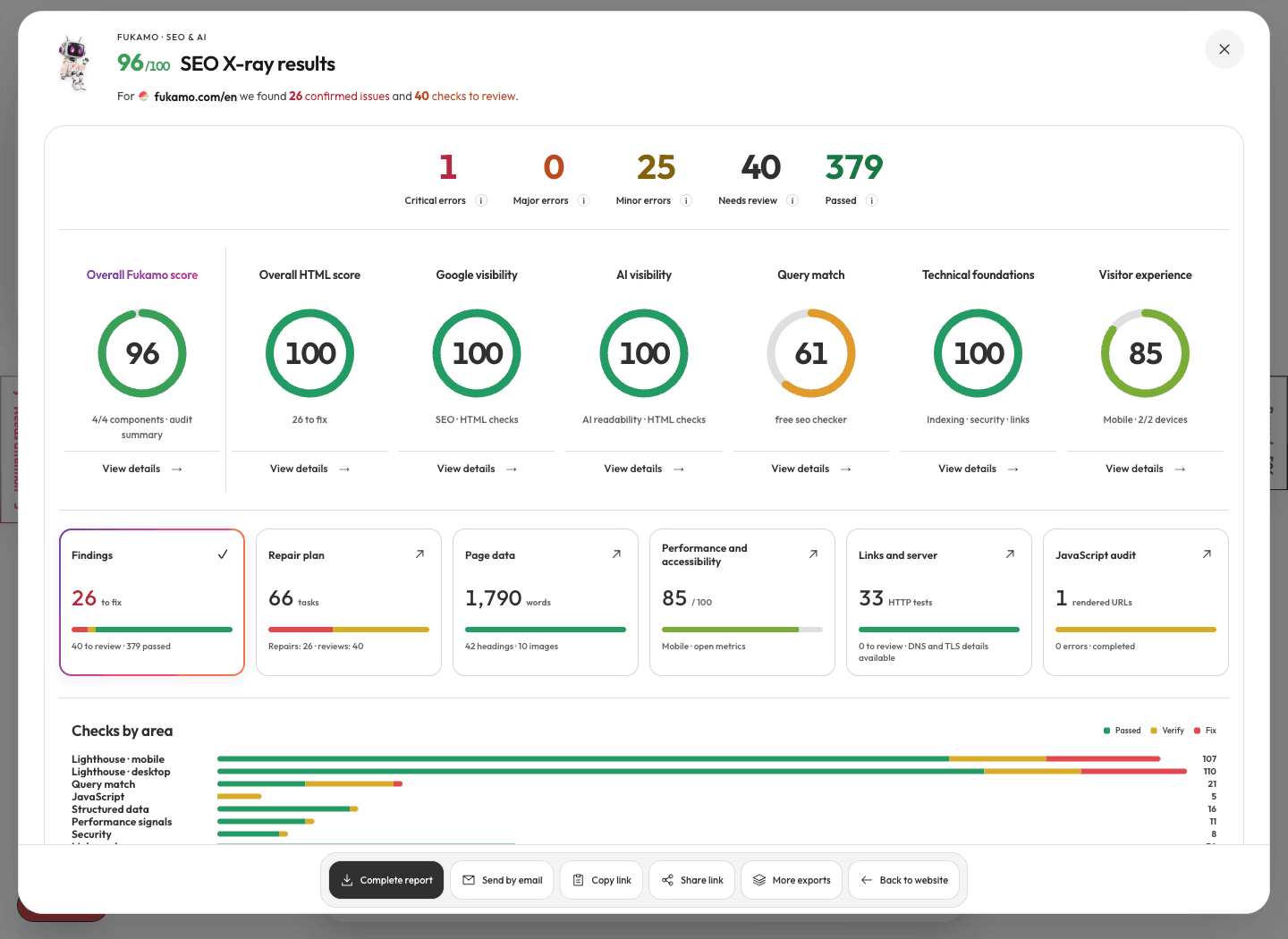
How to agree on the scope of a client SEO audit
List URLs, templates and separate systems before presenting a delivery audit. A marketing site and its ordering portal are not automatically the same assignment.
- Separate automatic checks from human review.
- Confirm the intended indexing policy.
- Label a sample as a sample, not the whole website.
How to group audit findings by their root cause
A wrong link in the shared menu may create many findings but need one component repair. Similar symptoms with different causes should remain separate tasks.
- Attach a representative URL and the offending output.
- Name the owner and required client input.
- Define the public behavior that will close the task.
What clients and developers need from an SEO finding
Give the client the customer consequence, and the developer the reproducible evidence. The same problem needs both explanations.
- Client — the service name creates a wrong expectation.
- Developer — this title appears on these template samples.
- Approval — compare the agreed brief with the requested change.
How to verify audit fixes before client handover
Close work with deployed evidence and clear status. A repaired finding is a technical outcome; later traffic or lead changes need separate evidence.
- Repeat the original public URL.
- Include a previously correct comparison page.
- Mark verified, waiting for content and awaiting decision separately.
How to verify the result
Close a finding only after the agreed production check passes. Attach the tested URL, evidence and date; keep accepted tradeoffs and work awaiting client input visible in the handover.
Primary documentation developers.google.com ↗
Frequently asked questions
How do I avoid handing over hundreds of duplicate tasks?
Group findings by cause and owner. Fixing a shared menu differs from writing one service page. Attach representative URLs, evidence, severity, and acceptance criteria to each group. Clients need the decision explained; developers need reproduction details.
When the task is complete
Each task has an owner and completion check. The handoff distinguishes automated evidence, client decisions, and areas the audit did not cover.
Related SEO guides
Check a specific page.
Fukamo shows findings, evidence and the next step.
679 rules + SEO, AI readability, performance and accessibility measurements for free.