Does a public URL mean the report contains no personal data?
Use a public URL without access tokens. Before sharing a report, inspect its text and HTML evidence; they may contain personal information from the checked page.
What to do step by step
- An audit processes the submitted URL and fetched technical evidence. The preview and PDFs use the content and inspection results.
- Email delivery processes the recipient and optional copied addresses. Operation may create server and security logs according to the hosting configuration.
- The private operational overview retains the audit time, domain and path without parameters, completion state, and PDF export or email counts for 90 days.
- GeoJS derives an approximate country and city and receives the IP address for that purpose. The operational overview does not store the IP address, search query or recipient addresses.
- Only authorised administrators can access the operational overview. Their sign-in uses an essential HttpOnly cookie lasting up to 12 hours.
- This browser stores the cookie choice in localStorage under fukamo:privacy:v1 for up to 180 days. An older consent without expanded audit history requires a new choice.
- Optional history in this browser retains up to 8 domains, 12 audit results and 5 website crawls, including URLs and findings. History and analytics have separate consent choices.
- Google Analytics and Google Tag Manager load only after analytics consent. Our events measure Fukamo pages without URL parameters, fragments, submitted audit addresses or form contents.
- Google processes technical visit data and analytics identifiers. Analytics cookies last up to 180 days; we do not enable advertising personalisation or Google Signals.
- Change consent through Cookie settings in the footer. Withdrawing analytics stops our tracking and removes accessible analytics cookies; declining history removes stored domains and results.
- Withdrawing consent does not retroactively delete data already sent to Google Analytics.
- An explicitly created recurring check stores its URL and up to 12 summaries on the server. A separate HttpOnly fukamo-monitor cookie protects access for 180 days; change notifications appear in the audit.
- You can delete a recurring check and its history in the audit. A check lasts up to 180 days; after expiry, the scheduler removes it on its next processing run.
- Confirm the precise operator identity, retention periods and contact channel before using this overview as a complete privacy notice.
A practical example
A public contact page can contain a person’s name and work email. Forwarding report evidence containing those details is an additional disclosure.
A common mistake
“No generative AI evaluation” does not mean “no data processing”. Do not assume particular retention periods or absence of logs without deployment evidence.
Try the report before checking your site.
Explore the sample report, then enter your own URL to see findings, HTML evidence and a repair plan for your page.
Run your audit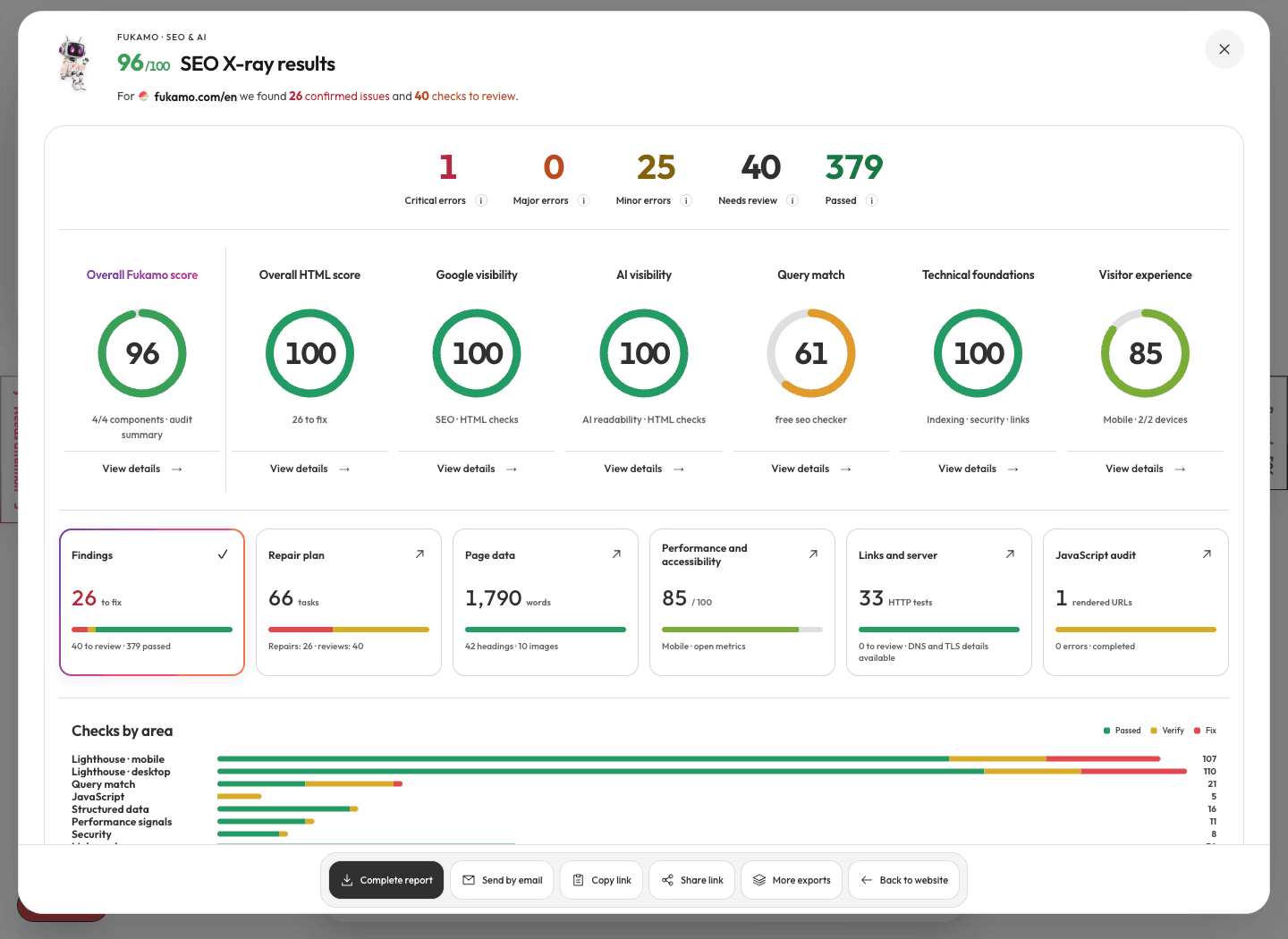
What data do audits and report delivery need?
An audit processes the submitted URL and the content obtained for evaluation. PDFs use the results; email delivery also processes recipient addresses.
- Submit public addresses without passwords or access tokens.
- Before sending, inspect the evidence, main recipient and optional copied addresses.
How to change history and analytics consent
Cookie settings in the footer lets you change consent. Browser history and analytics are separate choices; technical processing needed for an audit continues.
- Declining history removes stored domains and audit results in this browser.
- Withdrawing analytics consent stops our tracking and removes accessible analytics cookies; it does not retroactively erase data already sent to Google Analytics.
Where are operational data and recurring checks stored?
The private operational overview and an explicitly created recurring check have different purposes. The overview above lists their specific retention periods and scope.
- Only authorised administrators can access the operational overview.
- You can delete a recurring check and its history in the audit; a separate HttpOnly cookie protects access.
What does this data-processing overview cover?
This text describes technical product functions. Complete processing information must match confirmed operator details and the actual deployment.
- Public content can contain personal information; sharing a report creates another copy.
- Include the feature name and time of use in a question, without sending passwords or unrelated personal information.
How to verify the result
This technical overview reflects product functions. The full notice needs confirmed operator and deployment information; until then, this page is excluded from indexing.
Primary documentation commission.europa.eu ↗
Frequently asked questions
Does a public URL mean the report contains no personal data?
No. Public contact details, names, or page text can appear in evidence. Review the content before sharing it. This technical overview does not replace a complete processing notice. Operator identity, contact details, and actual retention conditions must be confirmed from operations.
When the task is complete
Do not invent retention periods or promises about absent logs. The page remains excluded from indexing until confirmed operational details are supplied.
Related SEO guides
Check a specific page.
Fukamo shows findings, evidence and the next step.
679 rules + SEO, AI readability, performance and accessibility measurements for free.