XML Sitemap Checker
Discover the site’s sitemap and check URLs and dates within the fetched scope.
Should redirects and filtered URLs be in a sitemap?
Build the sitemap from content that is actually published. It helps discovery on large or new sites, while internal links and indexing decisions still need separate attention.
What to do step by step
- Generate URLs from the same source as published content.
- Exclude errors, redirects, noindex pages and unfinished content.
- Use absolute HTTPS URLs on the preferred host.
- Update lastmod after a substantial content change, not every build.
- Reference the sitemap in robots.txt and submit it in Search Console.
How to replace a redirected URL in your sitemap
Teaching example; example.com addresses are illustrative.
Before
<urlset xmlns="http://www.sitemaps.org/schemas/sitemap/0.9">
  <url><loc>https://example.com/old-bike</loc></url>
</urlset>
After
<urlset xmlns="http://www.sitemaps.org/schemas/sitemap/0.9">
  <url><loc>https://example.com/bikes/city</loc></url>
</urlset>
If /old-bike redirects to /bikes/city, list the final preferred URL. In the scan, check sitemap retrieval and the audited URL’s presence. Other listed targets still need their own availability checks.
A common mistake
A fresh date on unchanged content is not evidence of freshness. Sitemap inclusion is not confirmation that Google indexed a page.
Try the report before checking your site.
Explore the sample report, then enter your own URL to see findings, HTML evidence and a repair plan for your page.
Run your audit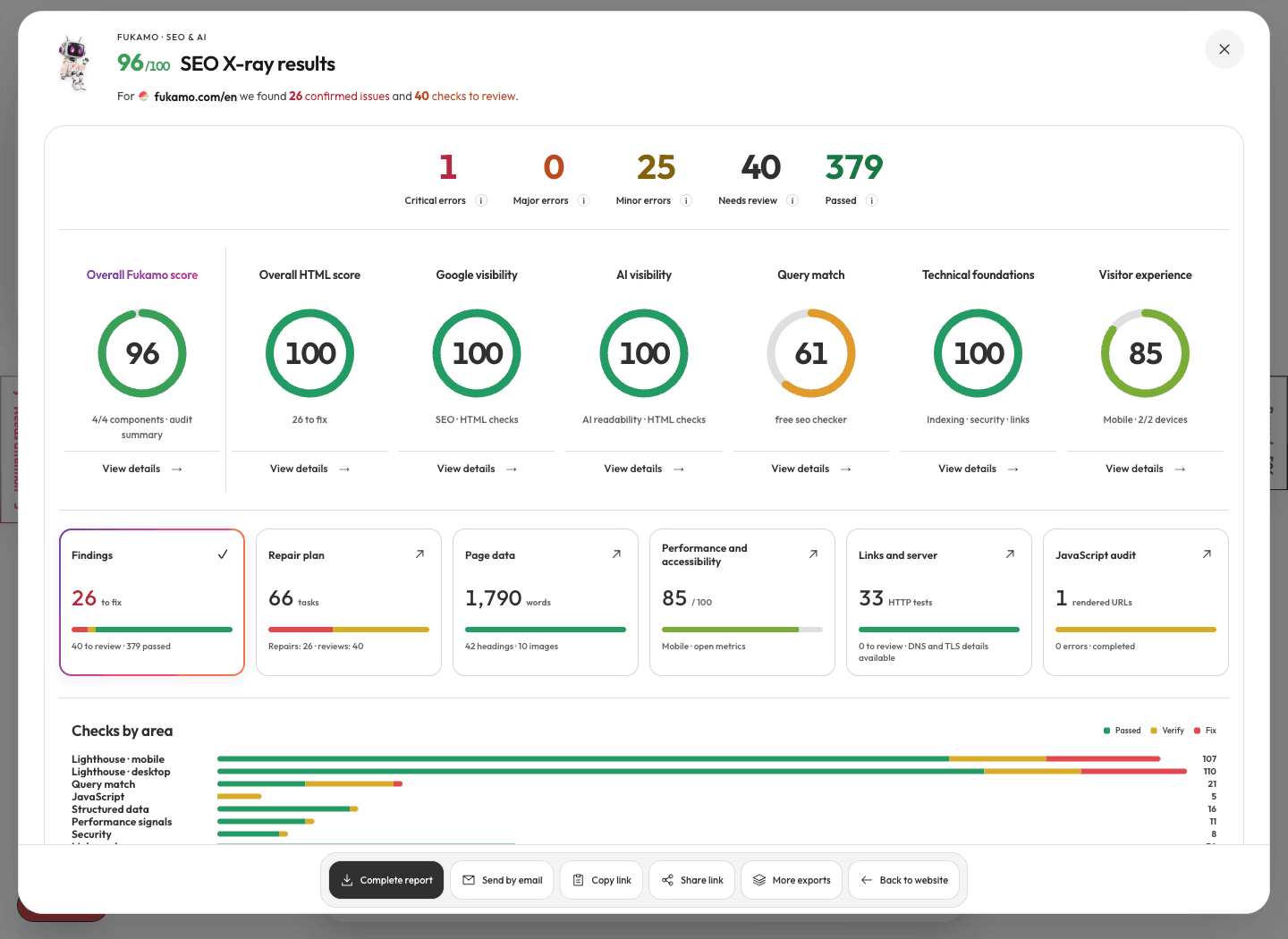
Which URLs belong in an XML sitemap
The sitemap generator should know which pages are published and intended for search. Exporting every router path can include drafts, filters and retired products.
- Compare published canonical pages with sitemap entries in both directions.
- Remove entries that redirect, fail or intentionally use noindex.
- Investigate missing important pages separately from redundant variants.
How to check the URLs listed in a sitemap
An XML entry can look valid while pointing to staging or an obsolete slug. Test the destination, not just the generator’s string format.
- Use the preferred host and final public URL.
- Check the target’s status and canonical declaration.
- For a sitemap index, open each linked child sitemap as well.
When to update lastmod in your sitemap
A new deployment does not mean every article changed. lastmod should come from a significant page update that you can identify.
- Changing the main content, structured data or meaningful links can justify an update.
- Changing only the copyright year does not.
- Test one edited and one untouched page; omit the optional date when it cannot be reliable.
Why an accepted sitemap does not confirm indexing
Search Console accepting a sitemap confirms file processing, not indexing of every listed URL. Read the individual exclusion reasons before rebuilding the file.
- Check that the endpoint returns sitemap XML, not a 200 HTML error.
- Correct redirects in the inventory; investigate duplicates through canonical rules.
- Keep useful internal links to important pages even when they appear in the sitemap.
How to verify the result
Compare entry counts with published canonical pages and fetch a sample of destinations. Check processing and indexing exclusions in Search Console.
Primary documentation developers.google.com ↗
Frequently asked questions
Should redirects and filtered URLs be in a sitemap?
List preferred URLs you want indexed. Replace redirecting addresses with their final destinations and remove excluded pages. Include a filter only when it represents a useful, distinct landing page. Update lastmod for substantive content changes rather than every build or automated deployment.
When the task is complete
Sample sitemap entries must return accessible content with consistent canonicals and indexing intent. A successful sitemap submission confirms processing of the file, not indexing of every listed page.
Related SEO guides
Check a specific page.
Fukamo shows findings, evidence and the next step.
679 rules + SEO, AI readability, performance and accessibility measurements for free.