What does Search Console say?
Guidance based on your selection. This tool does not access Search Console.Does every non-indexed URL need to be fixed?
Decide whether the URL should have its own search result. An empty filter or near-identical copy needs different treatment from an original service page.
What to do step by step
- Inspect the exact URL in Search Console. Record its status, last crawl and any available canonical information.
- Run a live test to see what Google can access now. A successful live test does not confirm indexing.
- Check the HTTP response, meta robots, X-Robots-Tag and canonical. Compare accessible content when JavaScript is involved.
- Find the closest page on your own site. Explain the distinct purpose and value of keeping both URLs.
- Fix the identified problem and add a relevant internal link from a page visitors naturally use.
- After a meaningful improvement, request indexing and monitor a new crawl. Repeated submissions do not improve the content.
A practical example
A fictional shop lists the same watches at URLs with different sort orders. It chooses a preferred category and aligns canonicals, links and the sitemap. Adding text to each copy alone cannot establish a distinct purpose.
A common mistake
Do not try to index every URL your software can generate. Avoid removing noindex or canonical tags in bulk, or blocking a page in robots.txt to “force” indexing. A new date without a meaningful change, or an automated rewrite, does not establish that the page became more useful.
Try the report before checking your site.
Explore the sample report, then enter your own URL to see findings, HTML evidence and a repair plan for your page.
Run your audit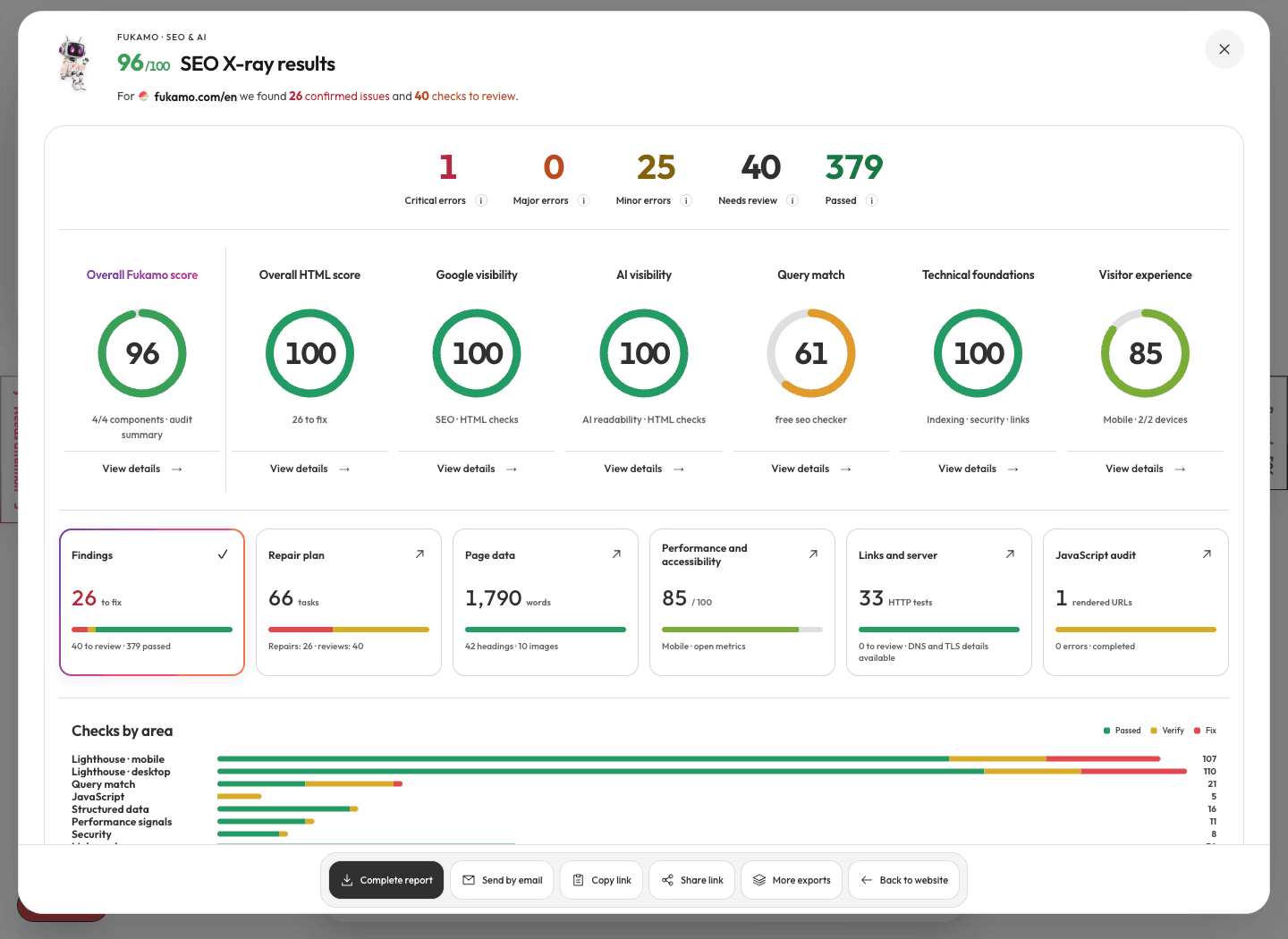
What does crawled but not indexed mean?
Crawled – currently not indexed means Google crawled the page but did not include it in the index. The status name alone does not identify the exact cause.
- In URL Inspection, record the last crawl time and the address being assessed.
- A live test checks current accessibility; a successful result does not confirm inclusion in the index.
Source Google — URL Inspection ↗
Which technical indexing obstacles should you check?
Verify that the public URL returns the intended content and suitable indexing instructions. The server response and rendered content can expose different problems.
- Compare the response status, noindex and canonical with the page’s purpose.
- For an empty application shell or security challenge, first resolve access to the actual content.
Does the URL need its own Google result?
An empty filter or parameter-based duplicate may not need separate indexing. An important offer needs its own useful answer and a clear place on the website.
- For similar versions, choose a preferred URL and align the canonical, links and sitemap.
- For a distinct service, add missing conditions, scope and contact steps based on the real offer.
When should you request indexing after a fix?
An indexing request is not confirmation of inclusion in results. Record the repair, then monitor the next crawl and the URL’s stored state.
- After editing, repeat the public test and request indexing in Search Console when appropriate.
- Do not use repeated requests without a content change as a substitute for diagnosis.
Source Google — request a recrawl ↗
How to verify the result
Check the outcome after Google processes the page again. Keep the change date, intervention and next URL status together. Fukamo can inspect technical conditions and content; Search Console reports Google’s indexing decision. If the evidence does not establish a cause, keep the diagnosis open.
Primary documentation support.google.com ↗
Frequently asked questions
Does every non-indexed URL need to be fixed?
No. Start with its purpose. A distinct offer or original tutorial has a different role from an empty filter or a parameter copy. Choose the important URLs first, then investigate the barrier or the reason Google may have selected something else.
Does this status prove that my page was penalized?
“Crawled – currently not indexed” does not by itself establish a penalty. It means Google crawled the page but is not currently indexing it. Investigate its content, similar pages and URL Inspection evidence.
Should I change the URL because of this status?
Do not move a page solely to create a fresh indexing request. First examine its usefulness and distinct purpose. If it is an unnecessary duplicate, choose consolidation or a canonical based on the actual relationship between pages.
When the task is complete
The review is complete when each important URL has an intended state, a recorded intervention and a current Search Console result. A duplicate URL does not need to become its own search result.
Related SEO guides
Check a specific page.
Fukamo shows findings, evidence and the next step.
679 rules + SEO, AI readability, performance and accessibility measurements for free.