Hreflang Checker
Check language tags and hreflang destinations in the submitted page’s HTML.
Do I need en-US when I have one English version?
Connect existing equivalents. A Slovak article and its English translation. The English homepage is not a substitute for a missing article translation. General English content can use the language code en.
What to do step by step
- Pair equivalent pages, not an article with the other language’s homepage.
- Include self-referencing and reciprocal alternatives.
- Use sk for Slovak and en for general English.
- Add x-default only for a deliberately selected fallback.
- Check response codes, canonical URLs and the language picker.
How to fix relative URLs in hreflang tags
Teaching example; example.com addresses are illustrative.
Before
<link rel="alternate" hreflang="en" href="/en/bike">After
<link rel="alternate" hreflang="en" href="https://example.com/en/bike">
<link rel="alternate" hreflang="sk" href="https://example.com/sk/bicykel">
The hreflang-url check expects an absolute URL. Put the same group on both language pages, then verify each page’s own canonical and the return links between versions.
A common mistake
Language is not location. Forced IP redirects can prevent access to a preferred version. Missing return links also break the relationship between alternatives.
Try the report before checking your site.
Explore the sample report, then enter your own URL to see findings, HTML evidence and a repair plan for your page.
Run your audit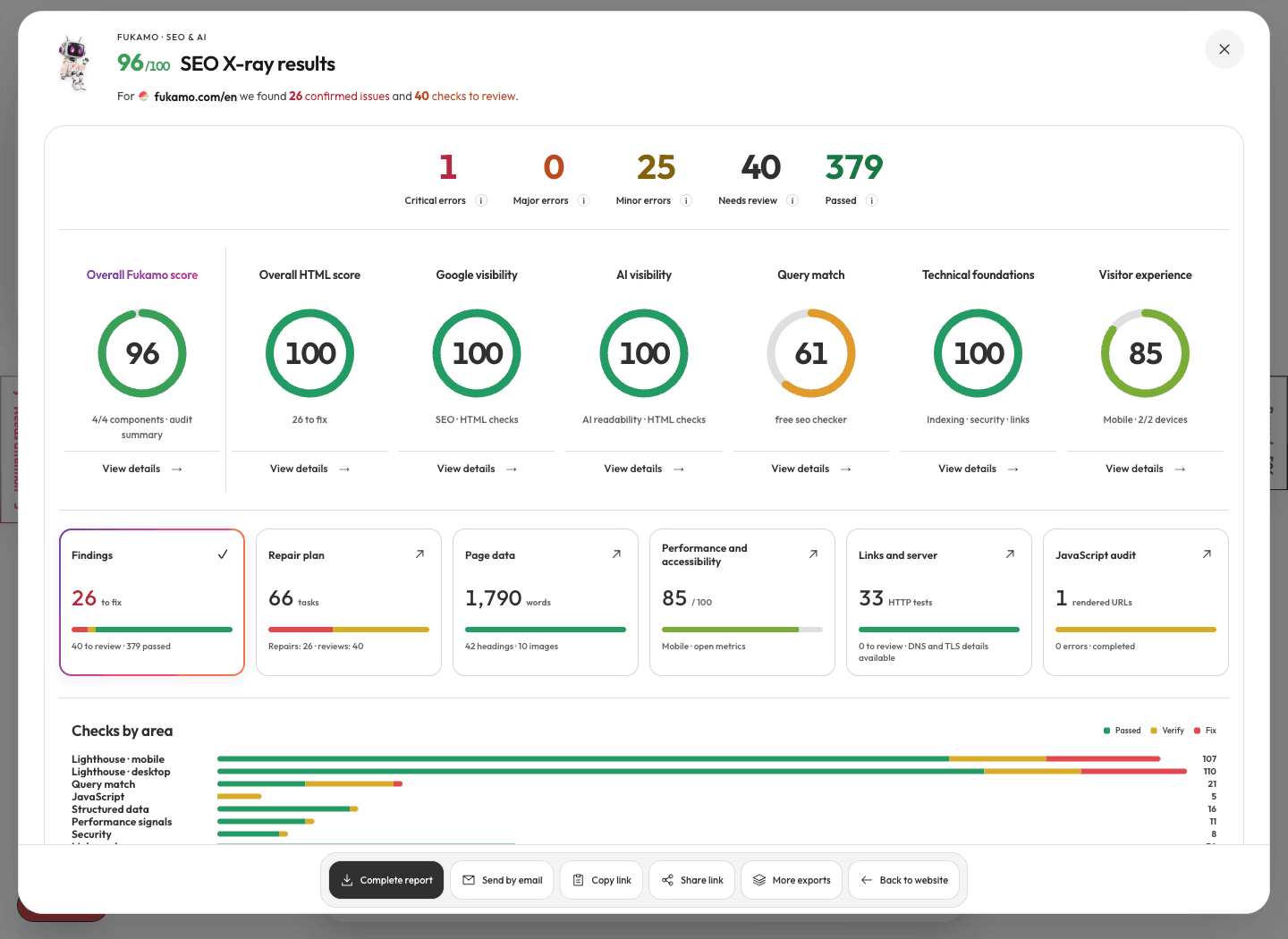
When to use language or regional hreflang codes
General English content can use en. Country-specific pages make sense when the offer, currency or conditions genuinely differ; a translated menu alone does not create a new market.
- Use sk for Slovak and en for a broadly applicable English version.
- Introduce a regional code only when you maintain that regional experience.
- Keep a visible way to choose another language without forced IP navigation.
How to connect language versions with return links
The English alternative of a service detail should open that service, not the homepage. Missing return links can invalidate the relationship for Google.
- List the current page and its real translations.
- Use complete absolute URLs for all alternatives.
- When a translated slug changes, update the pair and the language picker together.
How to keep hreflang and canonical URLs consistent
A fully translated article should not automatically canonicalise to the original-language homepage. Check page identity before diagnosing hreflang syntax.
- Open each language URL directly in a fresh browser session.
- Check its actual text, title, canonical and indexability.
- Use x-default for a deliberate fallback, not as a substitute for missing translations.
Where to implement hreflang and how to check it
Google supports HTML, HTTP headers and sitemap annotations. Pick the method your publishing system can maintain; three independent generators add opportunities for disagreement.
- Compare the complete alternative set on both pages.
- Test one article pair as well as the homepages.
- If Google shows another language, check indexing and content before changing every tag.
How to verify the result
Inspect the server HTML of both pages. Update the whole pair when a slug changes. Google identifies language from content; the lang attribute additionally supports accessibility.
Primary documentation developers.google.com ↗
Frequently asked questions
Do I need en-US when I have one English version?
Country-specific versions are useful when the offer or content genuinely differs by market. A single English page can use en and serve US readers too. Each language pair should connect equivalent content and link reciprocally, including self-references; x-default identifies a fallback version.
When the task is complete
Open both URLs without cookies and through the language picker. Verify HTML language, independent canonicals, and reciprocal alternates. Avoid automatic redirects that prevent a crawler from retrieving another language.
Related SEO guides
Check a specific page.
Fukamo shows findings, evidence and the next step.
679 rules + SEO, AI readability, performance and accessibility measurements for free.