When can several red findings be symptoms of one problem?
Determine whether a finding blocks access or weakens communication, then seek the shared cause. A template fix can be more useful than editing individual symptoms.
What to do step by step
- Check staging directives left on production.
- Inspect the metadata source behind repeated titles.
- Review URL generation behind canonical conflicts.
- Find outdated navigation behind broken links.
- Compare server and rendered content when text is missing.
A practical example
Fifteen articles all use “Blog” as their title because a fallback ignores article names. Fixing the title generator is better than adding fifteen separate workarounds.
A common mistake
Not every review is an error. Noindex can be intentional and decorative images can correctly have empty alt text.
Try the report before checking your site.
Explore the sample report, then enter your own URL to see findings, HTML evidence and a repair plan for your page.
Run your audit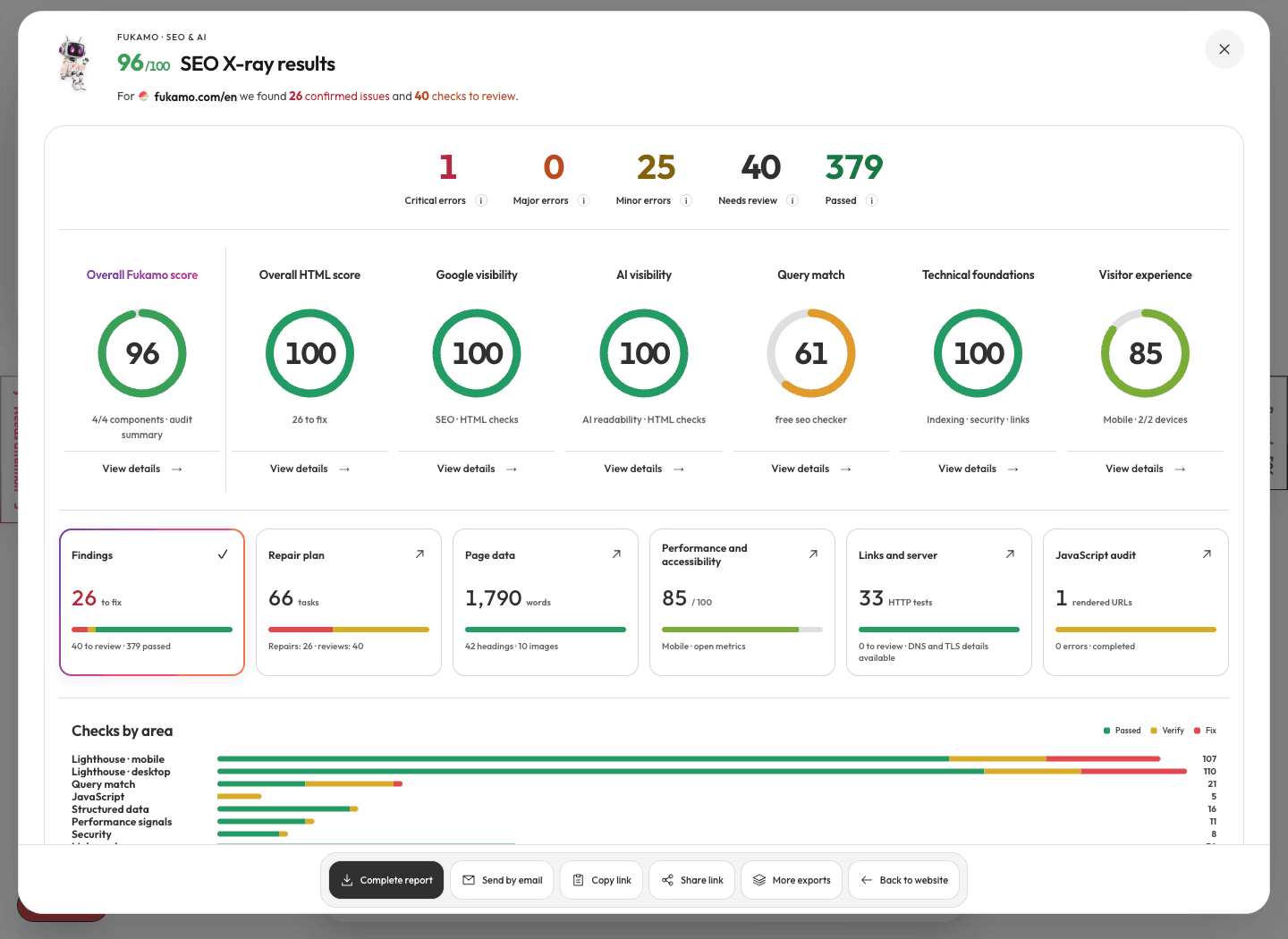
Why does an audit show many unrelated failures?
Dozens of unrelated errors can originate in a single security challenge or maintenance page. First inspect the response title, main text and final URL.
- A 200 status with visitor-verification text does not prove the article loaded.
- For blocking, record the response and time; repeatedly scanning may not remove the obstacle.
How to find staging settings on the live site
A public page can retain noindex or a canonical pointing to a staging domain after launch. Assess the fix against the intended public address.
- Check the HTML and HTTP headers for the specific production URL.
- Keep staging protected; do not automatically change its rules together with production.
How to distinguish a template defect from missing data
An empty title can indicate missing CMS data or a rendering defect. Comparing two pages helps establish where to intervene.
- Compare a failing product with a correct product using the same template.
- After repair, test both empty and populated values; fallback wording must not overwrite custom content.
Why has a saved fix not appeared on the website?
Saving a field does not establish the public page’s output. A cache, another language version or a different template may still return the old value.
- Fetch the public URL and compare the specific element or header.
- Check the related language version and a previously correct case after the same deployment.
How to verify the result
Retest an affected and a previously correct URL from the same template. Record the cause and acceptance check so a later redesign does not restore the problem.
Primary documentation developers.google.com ↗
Frequently asked questions
When can several red findings be symptoms of one problem?
If a server returns a protection page, the audit may find a missing title, heading, and product data together. Editing each item on the original site misses the cause. First verify which document the audit received. The same principle applies to empty HTML after an API failure.
When the task is complete
Evidence refers to the intended document. Resolve the shared cause, rerun the audit, and only then create tasks for remaining findings.
Related SEO guides
Check a specific page.
Fukamo shows findings, evidence and the next step.
679 rules + SEO, AI readability, performance and accessibility measurements for free.