Do I need a separate page for every city I serve?
Distinguish a physical branch from a service area. A separate local page needs useful local facts, conditions or examples instead of a fictional address.
Match the address on the contact page, footer and structured data. Service-page headings should describe the real service and area. On a bilingual site, hreflang should connect translations of the same service, not unrelated city pages.
What to do step by step
- Verify business name, phone, address and opening hours.
- Align the website with the public business profile.
- Explain coverage and travel conditions.
- Test mobile contact and directions.
- Support local claims with real information and current images.
A practical example
A repair company based in one town serves nearby areas. State the actual base and travel conditions rather than inventing an office in every target town.
A common mistake
A footer list of cities is not evidence of local presence. Fake reviews and branches give customers misleading information.
Try the report before checking your site.
Explore the sample report, then enter your own URL to see findings, HTML evidence and a repair plan for your page.
Run your audit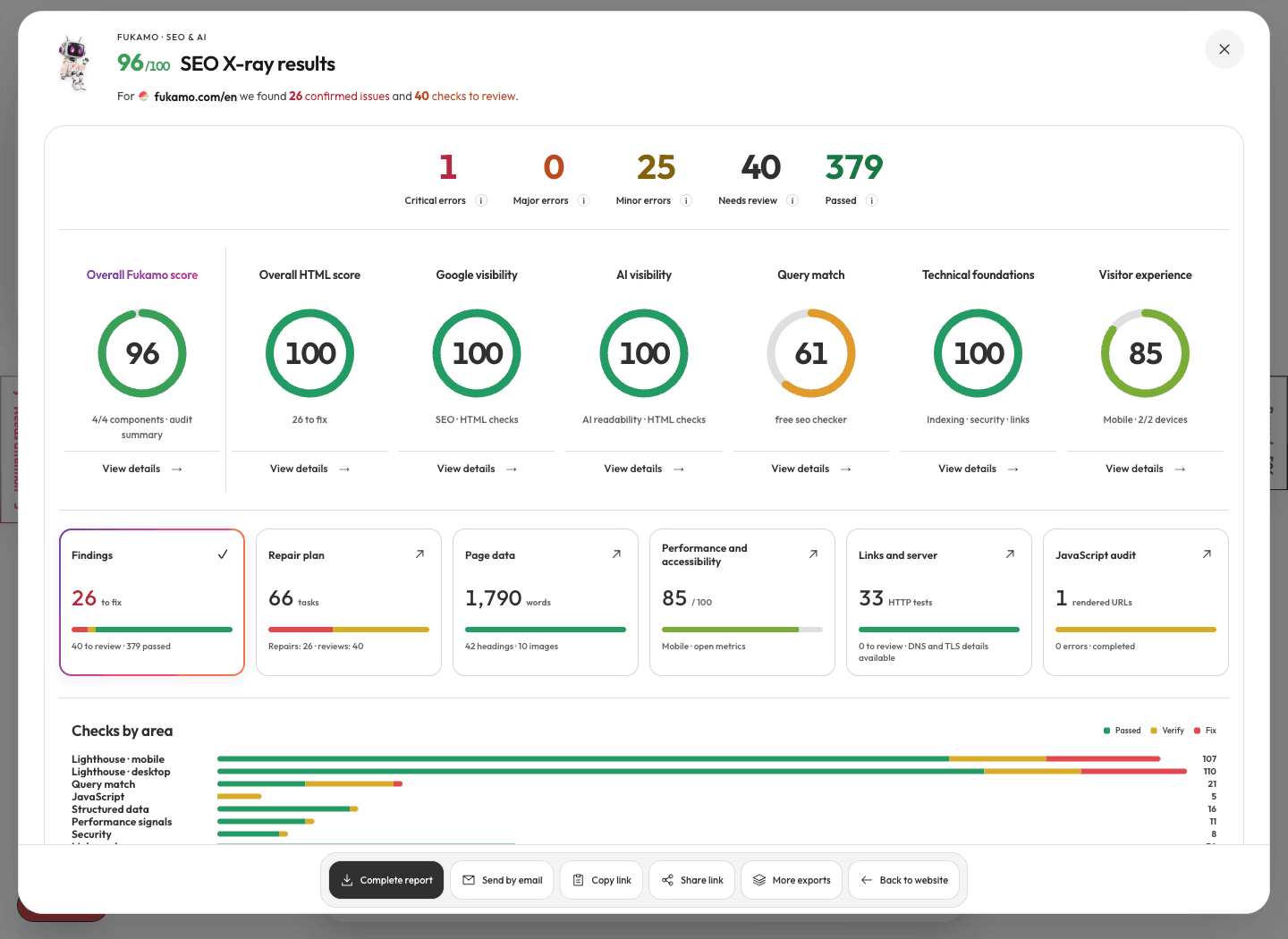
How to distinguish a business location from a service area
A bicycle repair business may accept workshop visits and arrange pickup elsewhere. Explain where customers can actually arrive and which services require an appointment.
- Compare the website and business profile details.
- Separate opening hours from phone availability.
- Confirm directions and drop-off instructions.
When a local service page needs distinct information
A neighborhood page should explain real service conditions, not imply a branch that does not exist. Identical coverage may fit one clear service-area page.
- Describe pickup arrangements or relevant access details.
- Use real project evidence with context.
- Avoid mass-produced city-name variants without distinct value.
What affects local rankings on Google?
Google describes relevance, distance and prominence as local-ranking factors. Complete information helps matching; a website edit cannot change the customer’s physical distance.
- Keep service descriptions and contact data accurate.
- Publish genuine reviews without changing their meaning.
- Treat map rankings separately from an HTML audit score.
How to test calls, directions and local inquiries
Try calling, directions and a service request as a new customer. A phone-link click is an interaction, not proof of a completed repair.
- Verify the correct location receives the inquiry.
- Update holiday hours wherever they appear.
- Measure relevant appointments within the area actually served.
How to verify the result
Compare the website and Business Profile with current opening hours, service area and contact details. Test calling and directions on a phone; check whether inquiries concern services you actually provide.
Primary documentation support.google.com ↗
Frequently asked questions
Do I need a separate page for every city I serve?
Only when you can provide distinct useful information. A real location, service availability, travel conditions, or a documented local project. Swapping city names in identical copy does not help visitors. Keep website details consistent with the actual business profile and never invent branch locations.
When the task is complete
The address or service area reflects reality and contact options work. Monitor relevant local queries; nationwide traffic does not necessarily represent customers within your service area.
Related SEO guides
Check a specific page.
Fukamo shows findings, evidence and the next step.
679 rules + SEO, AI readability, performance and accessibility measurements for free.