What should I check immediately after launching a website?
Prepare a short check of the public domain, production addresses and customer task. Repeat it on the actual website after deployment, including form delivery.
What to do step by step
A practical example
The staging domain remains in canonicals and the sitemap. After launch, fetch the public HTML and sitemap.xml; verify that both use the intended production addresses.
A common mistake
Empty contact details, invented business information and inactive paid buttons are unfinished product elements, not cosmetic SEO details.
Try the report before checking your site.
Explore the sample report, then enter your own URL to see findings, HTML evidence and a repair plan for your page.
Run your audit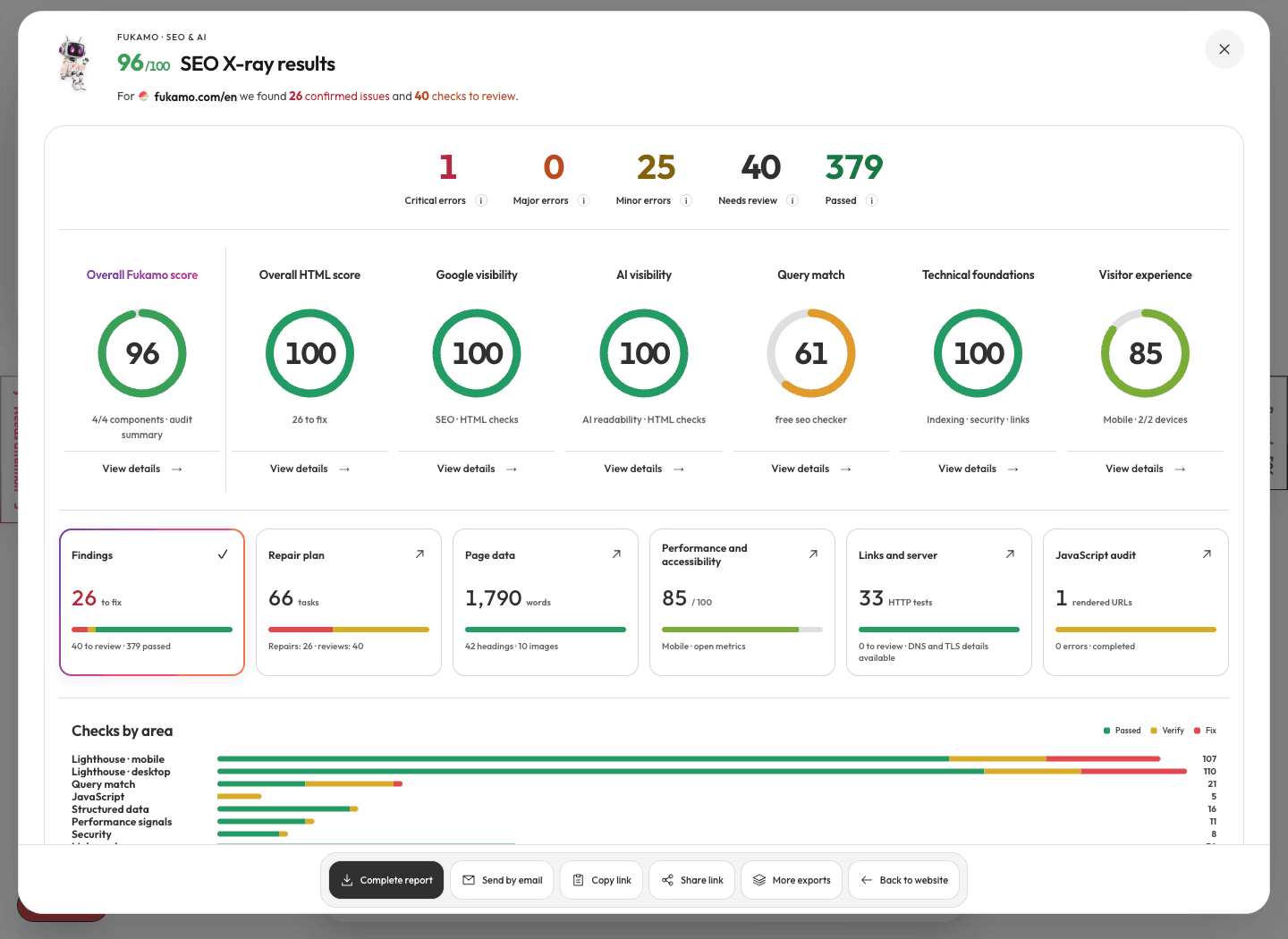
How to test the customer journey before launch
Before publication, complete the task from entry to confirmation. A working form includes delivery to the correct recipient and a clear response when something goes wrong.
- Find the offer, price and contact route on mobile; navigate the form by keyboard too.
- Test a missing required field, an invalid email and a successful submission.
How to verify production URLs
Prepare the preferred domain and language paths. Canonicals, the sitemap and internal links should point to the intended public URLs after launch.
- Check one page from each template and language version.
- Search for the staging domain in actual HTML and links, rather than only in CMS settings.
Which pages should search engines access?
Public pages intended for search need suitable crawling and indexing instructions. Test and private areas must retain their protection.
- Before launch, compare robots.txt, meta robots and X-Robots-Tag for specific URLs.
- If existing addresses change, verify the migration map and redirects before updating links.
What to check immediately after deployment
Assign a launch owner, a rollback method and a short public verification list. A staging test cannot establish the new domain’s configuration after publication.
- Immediately check the main URLs, booking and message delivery after deployment.
- Save a baseline and monitor server errors alongside important URL states in Search Console.
How to verify the result
Use Fukamo on public URLs after deployment, alongside functional testing and confirmed operator information. A successful deploy is only one part of readiness.
Primary documentation developers.google.com ↗
Frequently asked questions
What should I check immediately after launching a website?
Open production without signing in, check removal of staging noindex directives, and verify the domain in canonicals and sitemaps. Test forms, mobile navigation, and a nonexistent URL. Do not replace staging authentication with robots.txt; public production and private previews serve different purposes.
When the task is complete
A production sample from every main template is verified. The sitemap lists published preferred URLs, and no indexing signal points to the development domain.
Related SEO guides
Check a specific page.
Fukamo shows findings, evidence and the next step.
679 rules + SEO, AI readability, performance and accessibility measurements for free.