Which ecommerce page should I audit first?
Select an available product, an unavailable product, an important category and a filtered view. This separates one incomplete record from a recurring template problem.
What to do step by step
- Check product details, availability and indexing intent.
- Review category selection and useful subcategory links.
- Decide which filters deserve independent search pages.
- Compare variant and parameter canonical URLs with their content.
- Retest multiple product states after a template fix.
A practical example
A filter for red running shoes may represent a distinct useful selection. Sorting the same products by price usually changes order rather than purpose. Do not treat both identically.
A common mistake
A copied manufacturer description does not explain why to choose your store. Redirecting every unavailable product to the homepage also loses its specific context.
Try the report before checking your site.
Explore the sample report, then enter your own URL to see findings, HTML evidence and a repair plan for your page.
Run your audit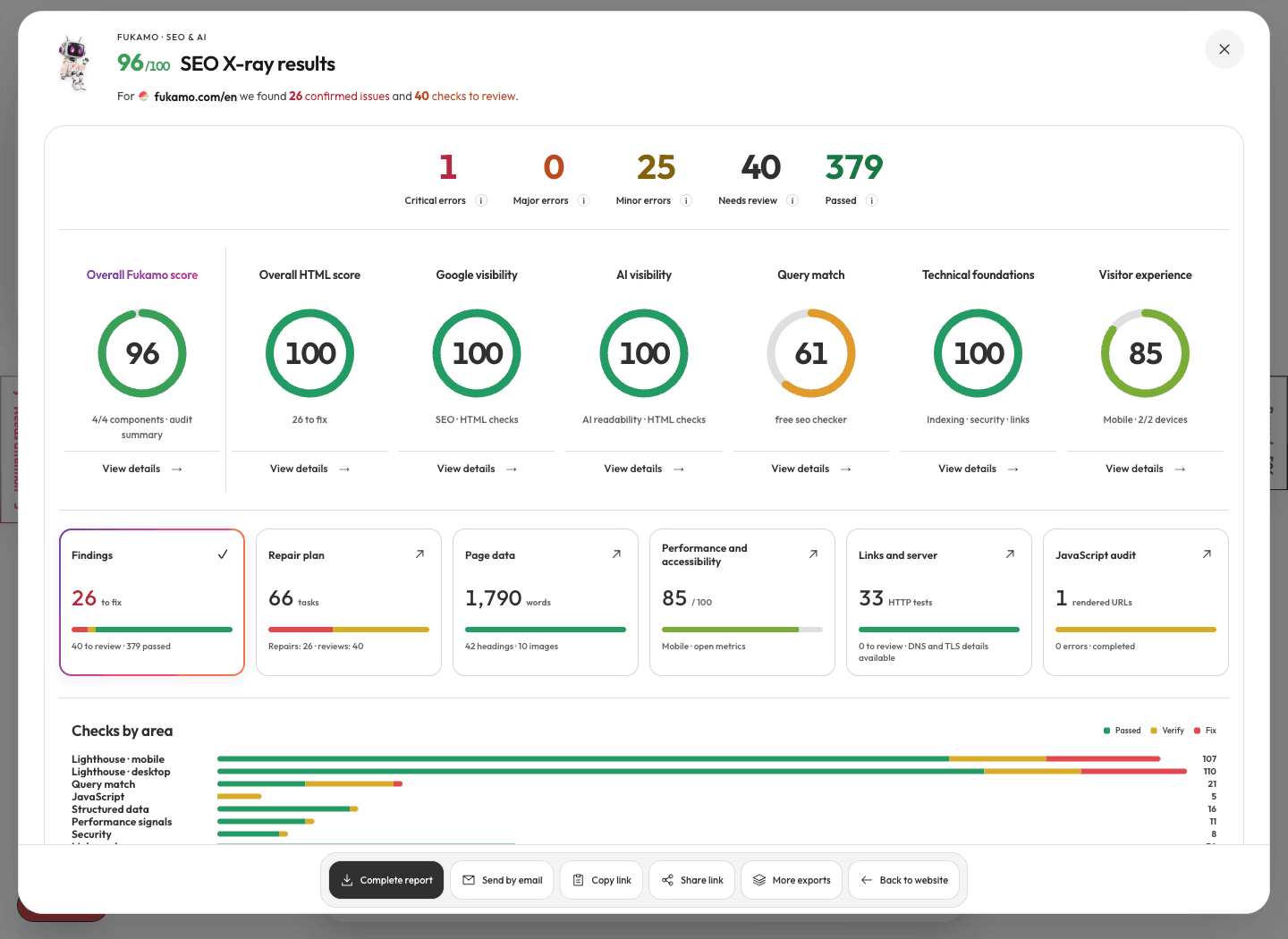
Which ecommerce pages should you audit first?
Inspect a category, product and unavailable item rather than only the homepage. For cookware, customers need compatibility, size and contents before choosing a pan.
- Record the exact URLs and product states.
- Include a variant and a filtered selection.
- Keep suspected template reach separate from confirmed examples.
Does the category description match the product selection?
An induction-compatible cookware category should actually help users find compatible items. More introductory text cannot repair a contradictory product grid.
- Explain distinctions that change the purchase decision.
- Link useful subcategories through ordinary crawlable links.
- Keep products reachable without relying only on site search.
How to handle filters and product availability
A parameter is not an indexing decision. A stable selection, temporary sorting and retired model need separate rules based on their purpose.
- Compare canonical and content on meaningful variants.
- Keep stockout information truthful.
- Choose a relevant replacement before redirecting a retired URL.
What to test after an ecommerce SEO fix
A correct price in HTML does not establish that variant selection and checkout work. Test the document and the customer’s purchase separately.
- Compare price, currency and stock across outputs.
- Repeat checks after catalog imports.
- Prioritize important inventory and verified shared causes.
How to verify the result
Retest the category, available product and unavailable product after the same deployment. Compare visible prices with structured data, then verify the variant and checkout interactions independently of the page scan.
Primary documentation developers.google.com ↗
Frequently asked questions
Which ecommerce page should I audit first?
Choose a commercially important category or product receiving relevant visits. Also test an unavailable product and a filter because they behave differently from a standard detail page. Categories support selection; products support purchase. Identical generic copy does not address both needs.
When the task is complete
Shoppers can find availability, variants, shipping conditions, and a next step. Canonicals and indexing match each sample’s purpose. Product inventory size is not the number of audited URLs.
Related SEO guides
Check a specific page.
Fukamo shows findings, evidence and the next step.
679 rules + SEO, AI readability, performance and accessibility measurements for free.