What should I check when a product opens through multiple paths?
Start with an important collection and product. Add equivalent language or market versions where applicable and check that their differences are clear to customers.
What to do step by step
- Inspect collection and product titles.
- Compare canonical URLs across paths to a product.
- Check language links against actual translated content.
- Inspect headings, images and app-generated data.
- Understand existing robots rules before customising them.
A practical example
A product can be reached through a collection and directly. Compare the content and preferred URL, then keep internal navigation consistent with the intended structure.
A common mistake
Unnecessary custom robots rules can damage working defaults. An installed app is not evidence of better performance or trustworthy structured data.
Try the report before checking your site.
Explore the sample report, then enter your own URL to see findings, HTML evidence and a repair plan for your page.
Run your audit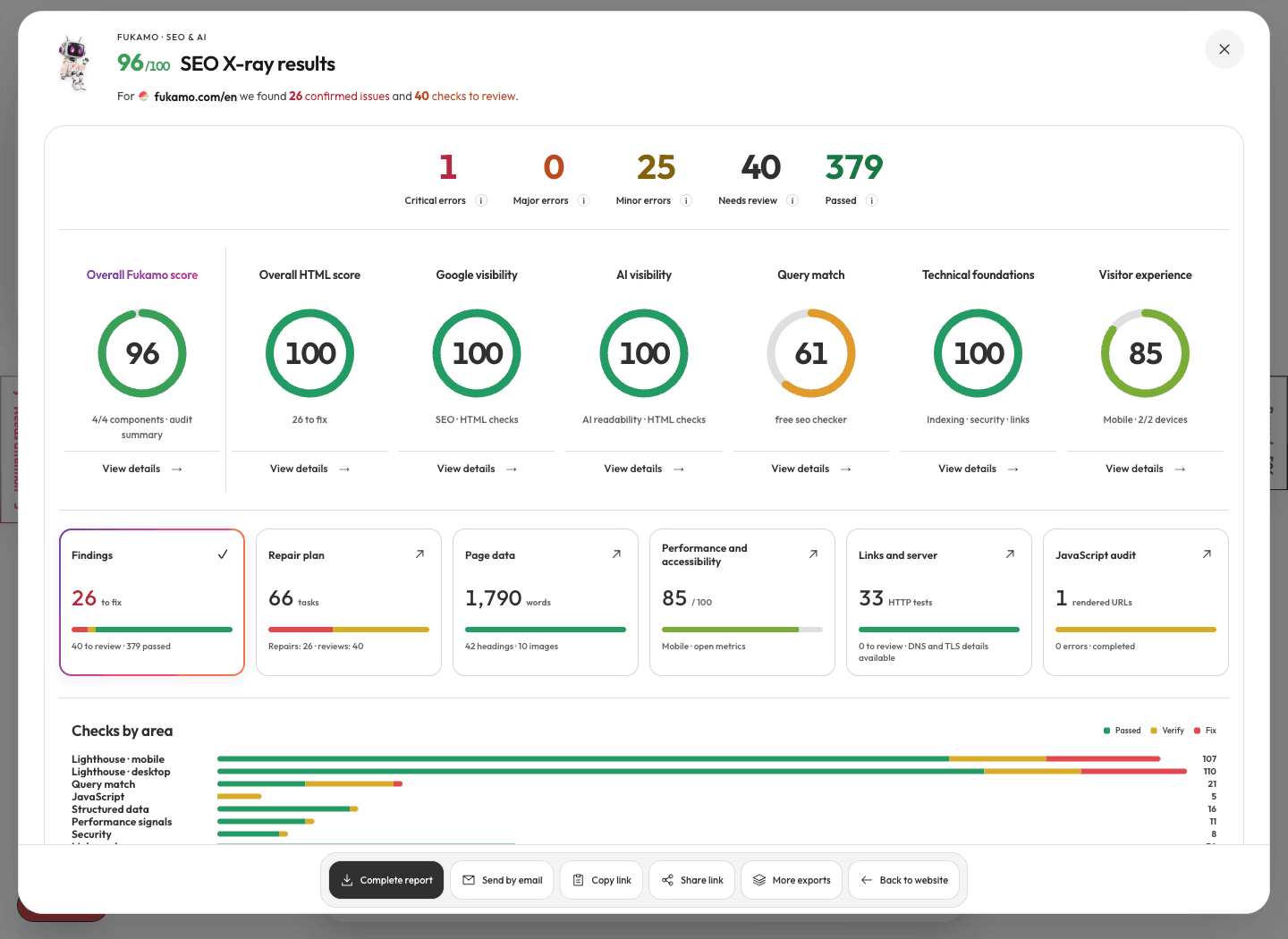
Do Shopify collections help shoppers choose?
A backpack collection explains which model fits a need; its product page confirms the specific purchase. Repeating the same slogan at both steps adds little.
- Explain capacity and actual use cases.
- Distinguish exterior dimensions from laptop-compartment size.
- Check the same product through collection and direct links.
Check canonical and hreflang for Shopify markets
Shopify documents automatic international SEO features for configured markets. Inspect existing canonical, hreflang and sitemap output before adding another implementation.
- Confirm published domains, languages and market URLs.
- Open equivalent products in fresh sessions.
- Compare currency, delivery conditions and stock.
How incomplete product data affects the storefront
A theme preview rarely exposes missing fields and long names. Include these states after publishing a theme or app change.
- Use an item without an optional description.
- Open size charts and expandable details on mobile.
- Compare offer data inserted by review or recommendation apps.
How to handle old product URLs after changes
Before changing a product handle, record old URLs and their destinations. A returning customer should reach a relevant offer, including in the intended market.
- Test direct entry after the rename.
- Inspect canonical on both relevant paths.
- Validate checkout and shipping separately from the HTML scan.
How to verify the result
Open the same product in each configured market and compare language, currency, canonical and hreflang. After a theme or app change, repeat the check on a product with incomplete optional fields.
Primary documentation help.shopify.com ↗
Frequently asked questions
What should I check when a product opens through multiple paths?
Compare each path’s HTML, declared canonical, and internal links. Multiple paths alone are not proof of a defect; conflicting preferences are the issue. For international sales, also check language, currency, and availability for the selected market without relying on previous cookies.
When the task is complete
The preferred product URL is accessible and signals agree. Collections still support selection, and the language picker reaches an equivalent product rather than always returning to the homepage.
Related SEO guides
Check a specific page.
Fukamo shows findings, evidence and the next step.
679 rules + SEO, AI readability, performance and accessibility measurements for free.